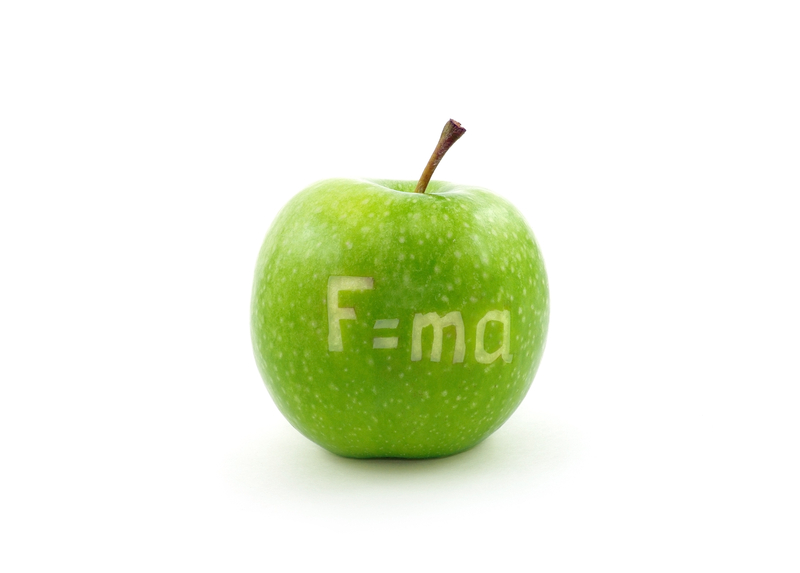
Legend has it that Isaac Newton formulated gravitational theory in 1665 or 1666 after watching an apple fall and asking why the apple fell straight down, rather than sideways or even upward. "He showed that the force that makes the apple fall... Continue Reading →

A collaborative study led by Yale researchers reports the many gene expression changes that develop over the course of a neurodegenerative disorder called spinocerebellar ataxia type 1, shedding light on its progression. Spinocerebellar ataxia type 1 is a disorder that... Continue Reading →

With help from an artificial language network, MIT neuroscientists have discovered what kind of sentences are most likely to fire up the brain’s key language processing centers. The new study reveals that sentences that are more complex, either because of... Continue Reading →

There are 88 star patterns known as constellations that are recognized by astronomers and the International Astronomical Union. The constellations are, technically, regions the sky is divided into in order to help with identifying where objects are located on the sky.... Continue Reading →
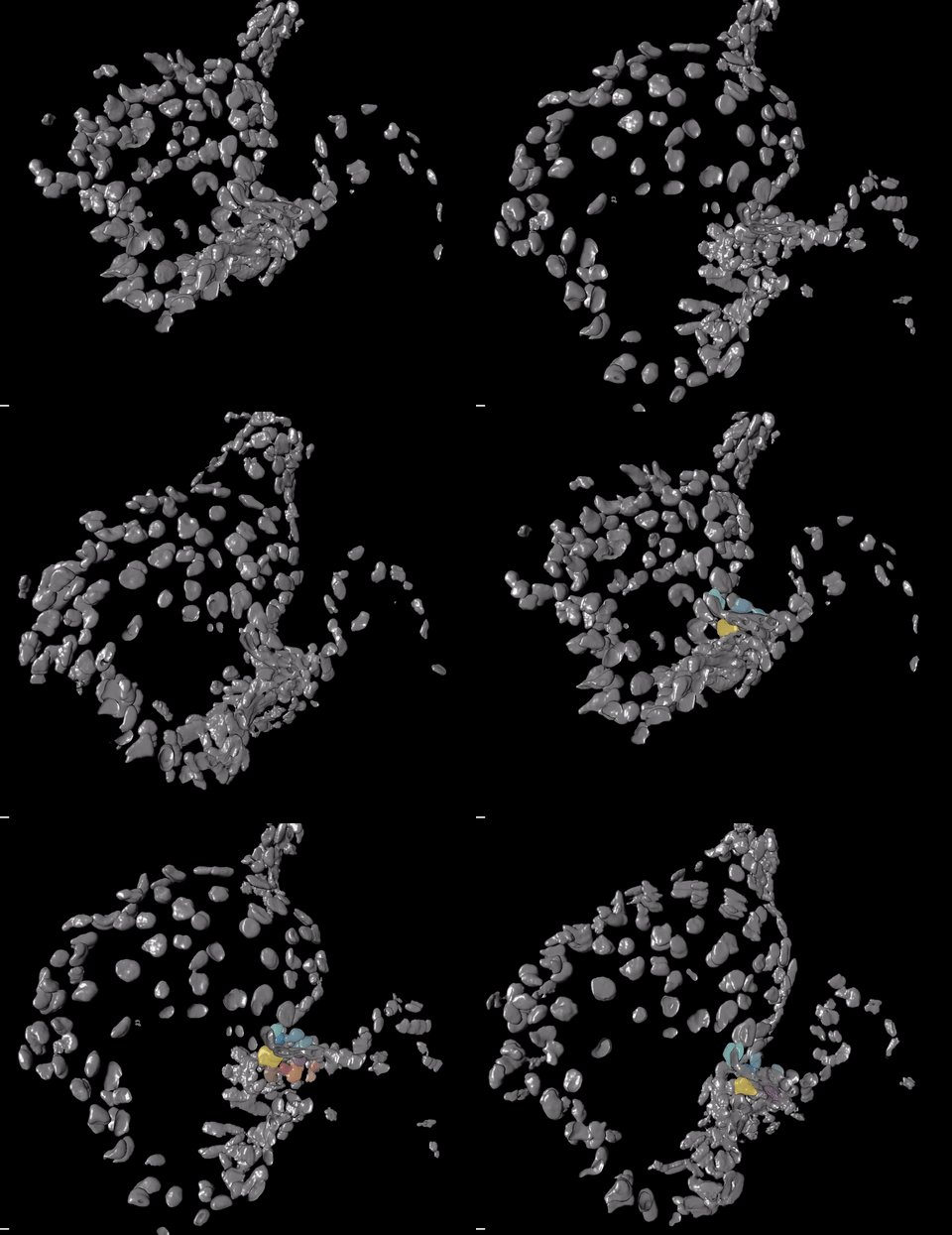
Our hearts began beating as early as four weeks after conception, even before they had fully developed. Heart valves formed shortly afterwards, ensuring blood always flows in the right direction – a similar valve is developing in this beating zebrafish... Continue Reading →

John Ronald Reuel Tolkien (January 3, 1892– September 2, 1973) was a major scholar of the English language, specializing in Old and Middle English. Twice Professor of Anglo-Saxon (Old English) at the University of Oxford, he also wrote a number... Continue Reading →

Using a type of artificial intelligence known as deep learning, MIT researchers have discovered a class of compounds that can kill a drug-resistant bacterium that causes more than 10,000 deaths in the United States every year. In a study appearing in Nature, the... Continue Reading →
Rochester astrophysicist Adam Frank explores the links between atmospheric oxygen and detecting extraterrestrial technology on distant planets. In the quest to understand the potential for life beyond Earth, researchers are widening their search to encompass not only biological markers, but... Continue Reading →

What is that unusual red halo surrounding this aurora? It is a Stable Auroral Red (SAR) arc. SAR arcs are rare and have only been acknowledged and studied since 1954. The featured wide-angle photograph, capturing nearly an entire SAR arc surrounding more common green... Continue Reading →
 Scents of Science