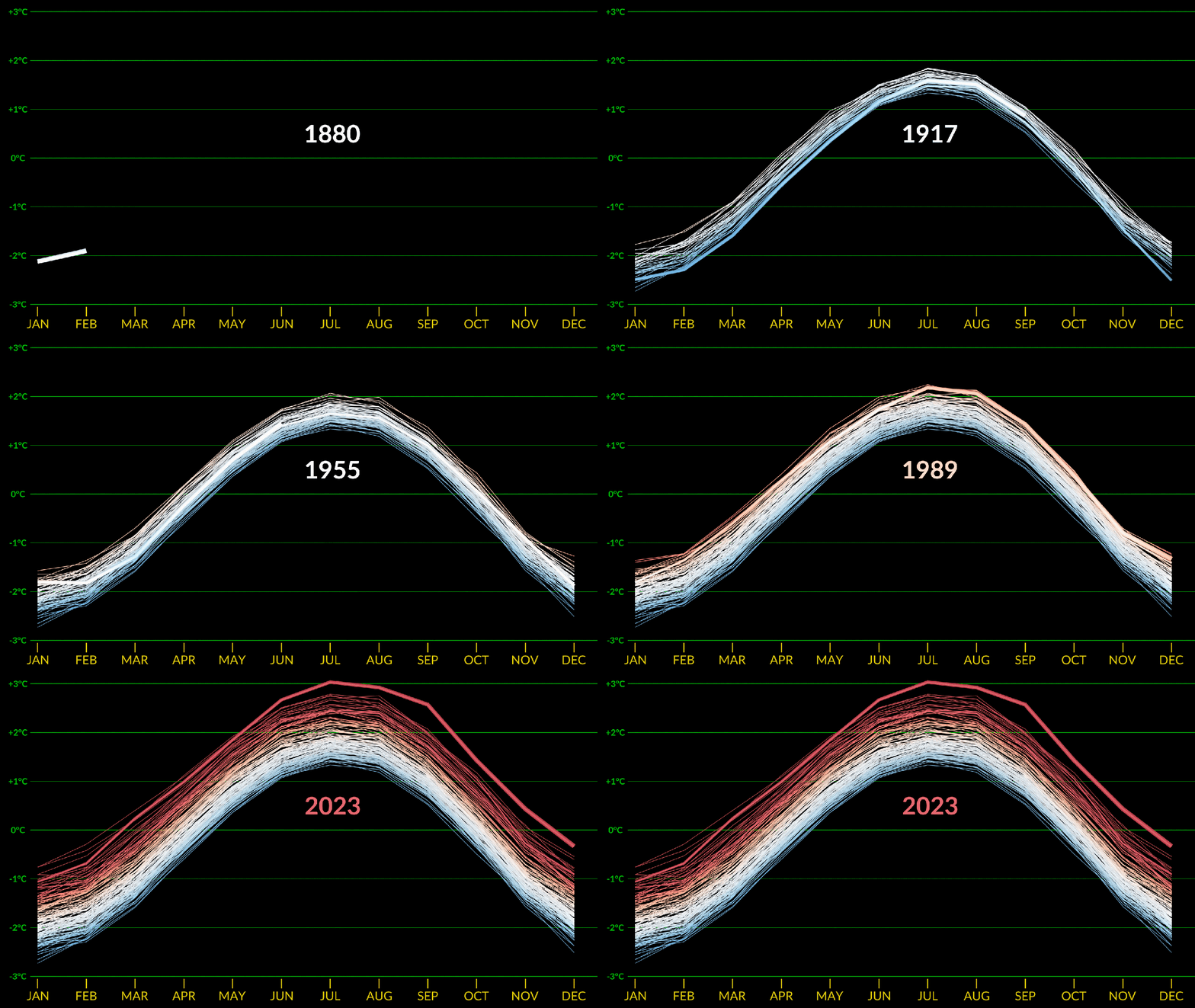
Earth’s average surface temperature in 2023 was the warmest on record, according to an analysis by NASA. Global temperatures last year were around 2.1 degrees Fahrenheit (1.2 degrees Celsius) above the average for NASA’s baseline period (1951-1980), scientists from NASA’s... Continue Reading →

Sometimes, it's the stars that are the hardest to see that are the most interesting. IC 348 is a young star cluster that illuminates surrounding filamentary dust. The stringy and winding dust appears pink in this recently released infrared image from the Webb Space Telescope.... Continue Reading →

In recent years, research has begun to reveal that the lines of communication between the body’s organs are key regulators of aging. When these lines are open, the body’s organs and systems work well together. But with age, communication lines... Continue Reading →

Carrying NASA scientific instruments as part of its Commercial Lunar Payload Services initiative, Astrobotic’s Peregrine lander launched on United Launch Alliance’s (ULA) Vulcan rocket at 2:18 a.m. EST from Launch Complex 41 at Cape Canaveral Space Force Station in Florida. Peregrine has... Continue Reading →

New research indicates that the eating disorder anorexia nervosa is associated with being an early riser, unlike many other disorders that tend to be evening-based such as depression, binge eating disorder and schizophrenia. The study, which is published in JAMA Network... Continue Reading →
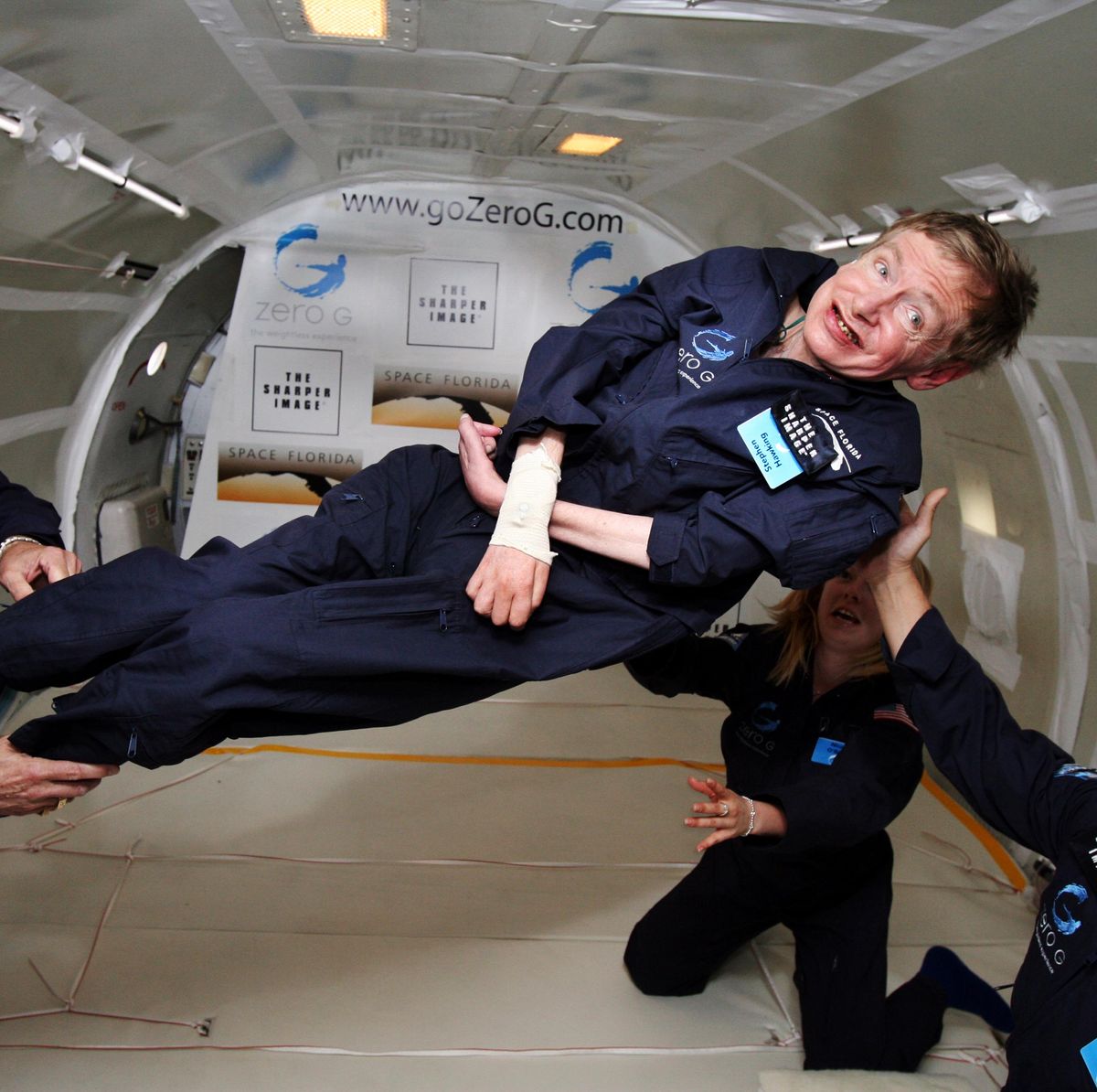
Stephen was born in Oxford on 8 January 1942, the three hundredth anniversary of the death of Galileo Galilei. His father, Frank Hawking, came from a family of tenant farmers in Yorkshire who suffered hard times during the agricultural depression at... Continue Reading →

Venus goes through phases. Just like our Moon, Venus can appear as a full circular disk, a thin crescent, or anything in between. Venus, frequently the brightest object in the post-sunset or pre-sunrise sky, appears so small, however, that it usually requires binoculars or a small telescope to... Continue Reading →
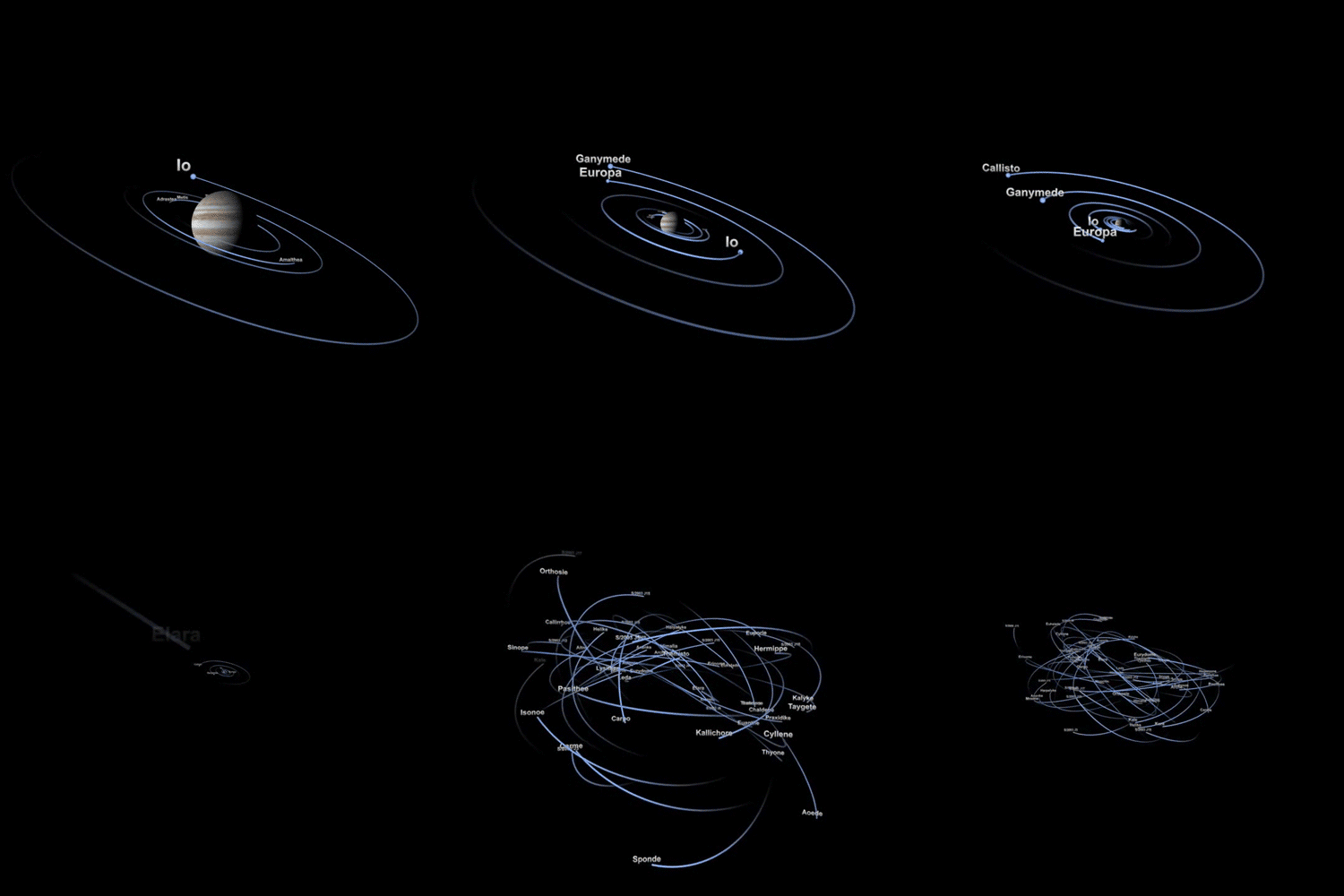
Probably the most significent contribution that Galileo Galilei made to science was the discovery of the four satellites around Jupiter that are now named in his honor. Galileo first observed the moons of Jupiter on January 7, 1610 through a... Continue Reading →
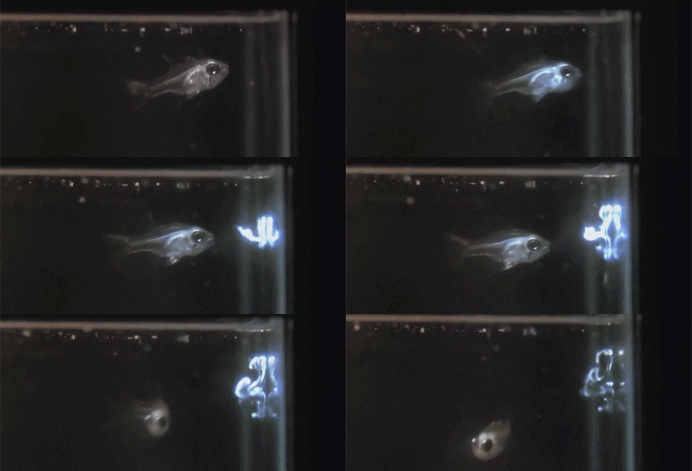
Helen Czerski uncovers the amazing light show that ensues when a cardinal fish swallows an ostracod.Just hocus pocus awesomeness! Watch: https://www.bbc.co.uk/programmes/p024m0s1
 Scents of Science