
An important aspect of human memory is our ability to conjure specific moments from the vast array of experiences that have occurred in any given setting. For example, if asked to recommend a tourist itinerary for a city you have... Continue Reading →

Scientists at the University of Birmingham in collaboration with the University of Amsterdam have uncovered a possible explanation for the mental sluggishness that often accompanies illness. An estimated 12M UK citizens have a chronic medical condition, and many of them... Continue Reading →

Yes, London. You know, fish, chips, cup o tea, bad food, worse weather, Mary-fucking-Poppins. London!

The answer to the question of why ice is slippery lies in a film of water that is generated by friction, one that is far thinner than expected and much more viscous than usual water through its resemblance to the... Continue Reading →

Using the first new method in half a century for measuring the size of the proton via electron scattering, the PRad collaboration has produced a new value for the proton's radius in an experiment conducted at the Department of Energy's... Continue Reading →

One of the enduring puzzles of hearing loss is the decline in a person's ability to determine where a sound originates, a key survival faculty that allows animals -- from lizards to humans -- to pinpoint the location of danger,... Continue Reading →
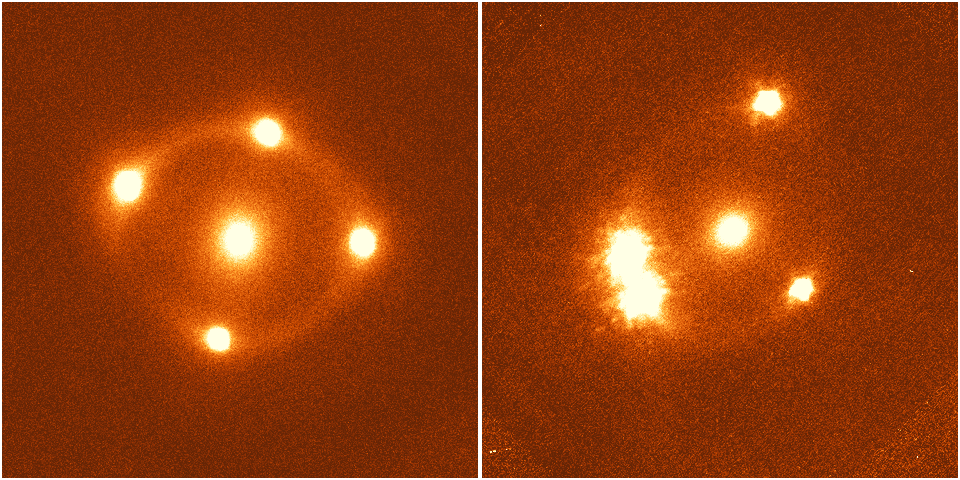
New measurements of the rate of expansion of the universe, led by astronomers at the University of California, Davis, add to a growing mystery: Estimates of a fundamental constant made with different methods keep giving different results. "There's a lot... Continue Reading →

A new study documents structural differences in the brains of preschool-age children related to screen-based media use. The study, published in JAMA Pediatrics, shows that children who have more screen time have lower structural integrity of white matter tracts in parts... Continue Reading →
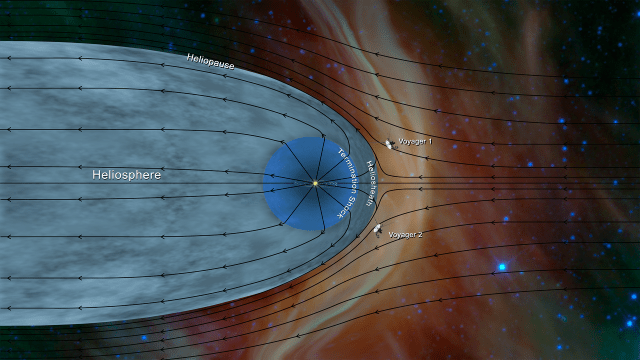
Voyager 1 has a companion in the realm of the stars. Researchers at the University of Iowa report that the spacecraft Voyager 2 has entered the interstellar medium (ISM), the region of space outside the bubble-shaped boundary produced by wind... Continue Reading →
 Scents of Science