
In space, the human body loses muscle mass. Although living in microgravity requires no heavy lifting, this loss of muscle reduces physical performance. Decreased muscle mass could also prove particularly problematic on future missions to destinations such as the Moon... Continue Reading →

On October 29, 2018, NASA's Juno probe successfully performed her Perijove-16 Jupiter flyby.This time, Juno's spin axis was pointed away from Earth, in order to obtain a better view to Jupiter for Juno's instruments. At the same time, solar conjunction... Continue Reading →

What is the nearest major galaxy to our own Milky Way Galaxy? Andromeda. In fact, our Galaxy is thought to look much like Andromeda. Together these two galaxies dominate the Local Group of galaxies. The diffuse light from Andromeda is caused by the hundreds of billions of stars that... Continue Reading →
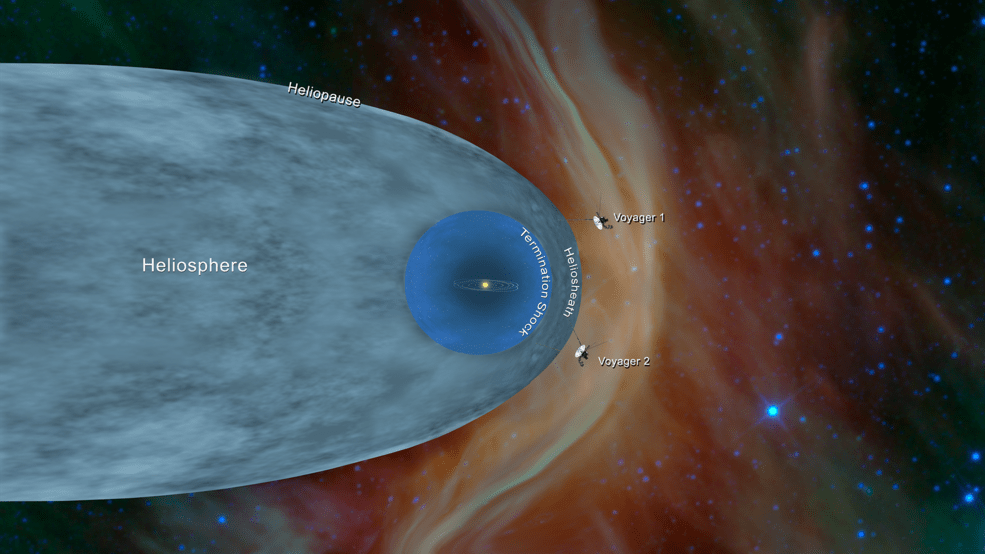
For the second time in history, a human-made object has reached the space between the stars. NASA’s Voyager 2 probe now has exited the heliosphere – the protective bubble of particles and magnetic fields created by the Sun. Voyager 2 now is... Continue Reading →
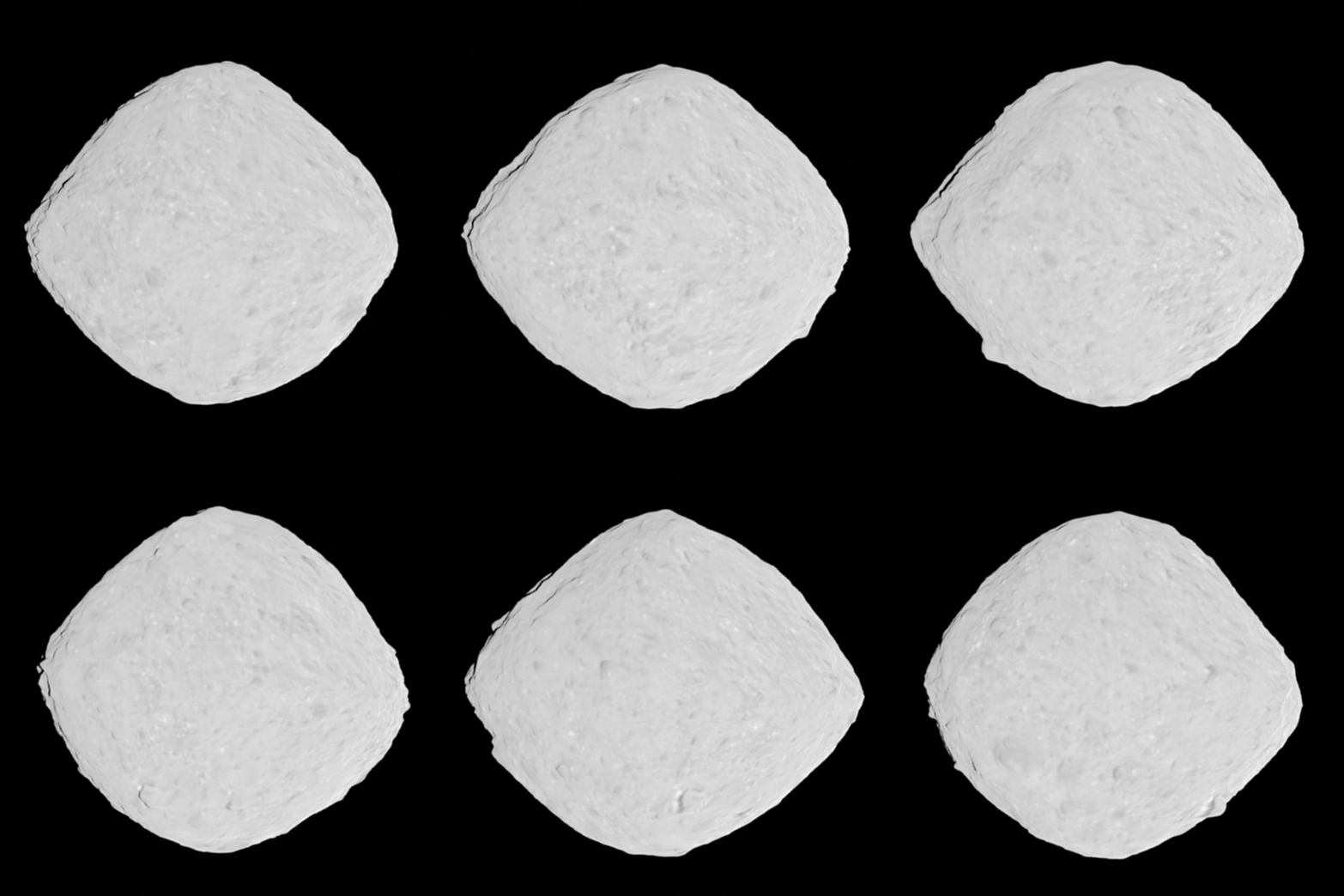
OSIRIS-REx mission recently arrived at its destination, asteroid Bennu. On approach, data from the spacecraft’s spectrometers revealed chemical signatures of water trapped in clay minerals. While Bennu itself is too small to have ever hosted liquid water, the finding indicates... Continue Reading →

This is NASA InSight's first full selfie on Mars. It displays the lander's solar panels and deck. On top of the deck are its science instruments, weather sensor booms and UHF antenna. The selfie was taken on Dec. 6, 2018... Continue Reading →
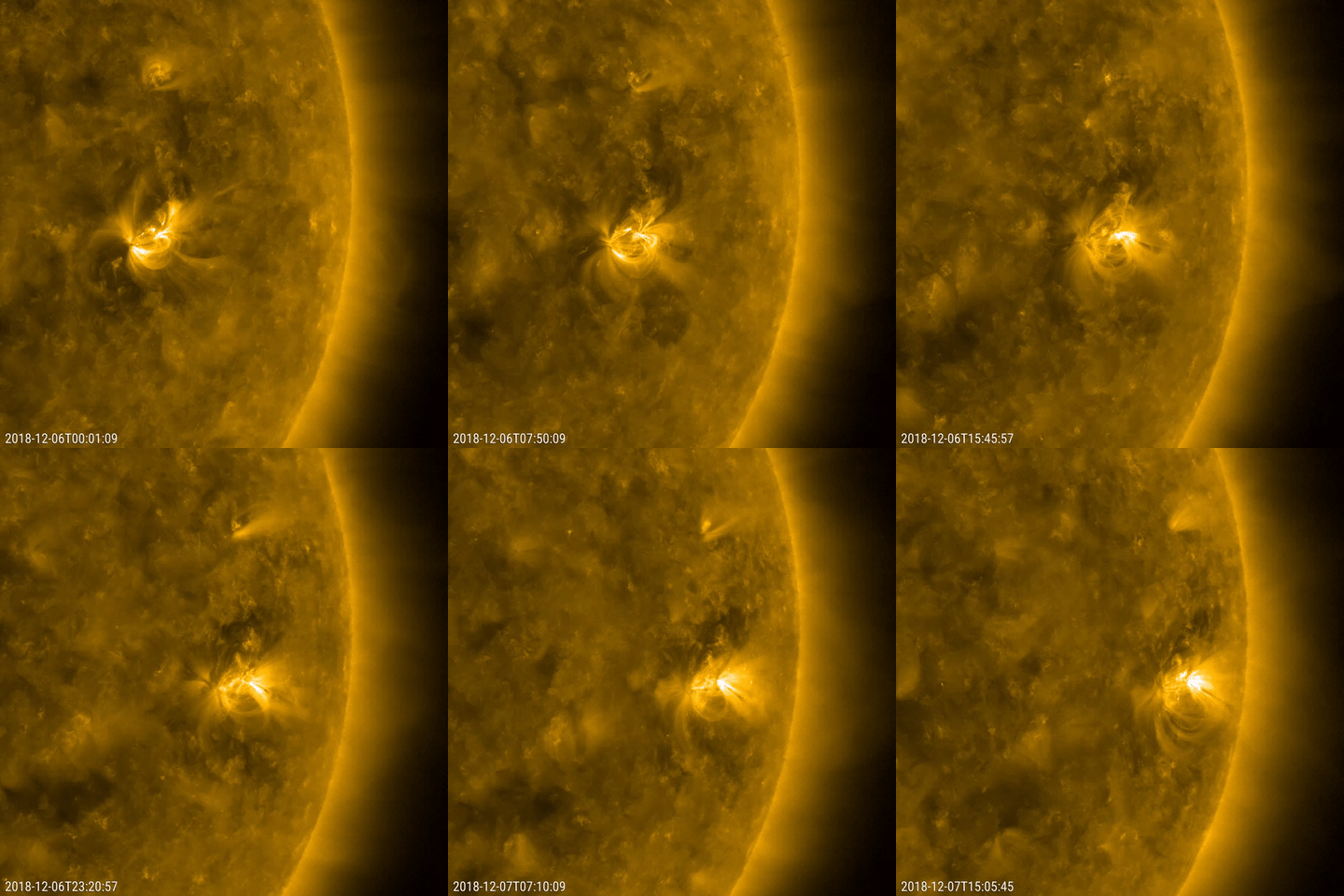
The only active region observed this week appeared on Dec. 5, 2018 and grew into an average size display of dynamic activity (Dec. 6-7, 2018). As viewed in a wavelength of extreme ultraviolet light, the region presented numerous magnetic loops... Continue Reading →

Sometimes it’s all about perspective. This very convincing image of a conjoined moon masquerading as a snowman is actually two separate Saturnian moons – Dione and Rhea – taken from such an angle by the international Cassini spacecraft that they... Continue Reading →

Sand dunes often accumulate in the floors of craters. In this region of Lyot Crater, NASA's Mars Reconnaissance Orbiter (MRO) shows a field of classic barchan dunes on Jan. 24, 2018. Just to the south of the group of barchan... Continue Reading →
 Scents of Science