
Amid reports that the Russians will keep the cause of an air leak discovered at the International Space Station in 2018 secret, NASA Administrator Jim Bridenstine has promised to speak personally with the head of the Russian space agency. "They have not... Continue Reading →

Using radar data from NASA's Cassini spacecraft, recently published research presents a new scenario to explain why some methane-filled lakes on Saturn's moon Titan are surrounded by steep rims that reach hundreds of feet high. The models suggests that explosions... Continue Reading →

A newly discovered comet has excited the astronomical community this week because it appears to have originated from outside the solar system. The object — designated C/2019 Q4 (Borisov) — was discovered on Aug. 30, 2019, by Gennady Borisov at... Continue Reading →
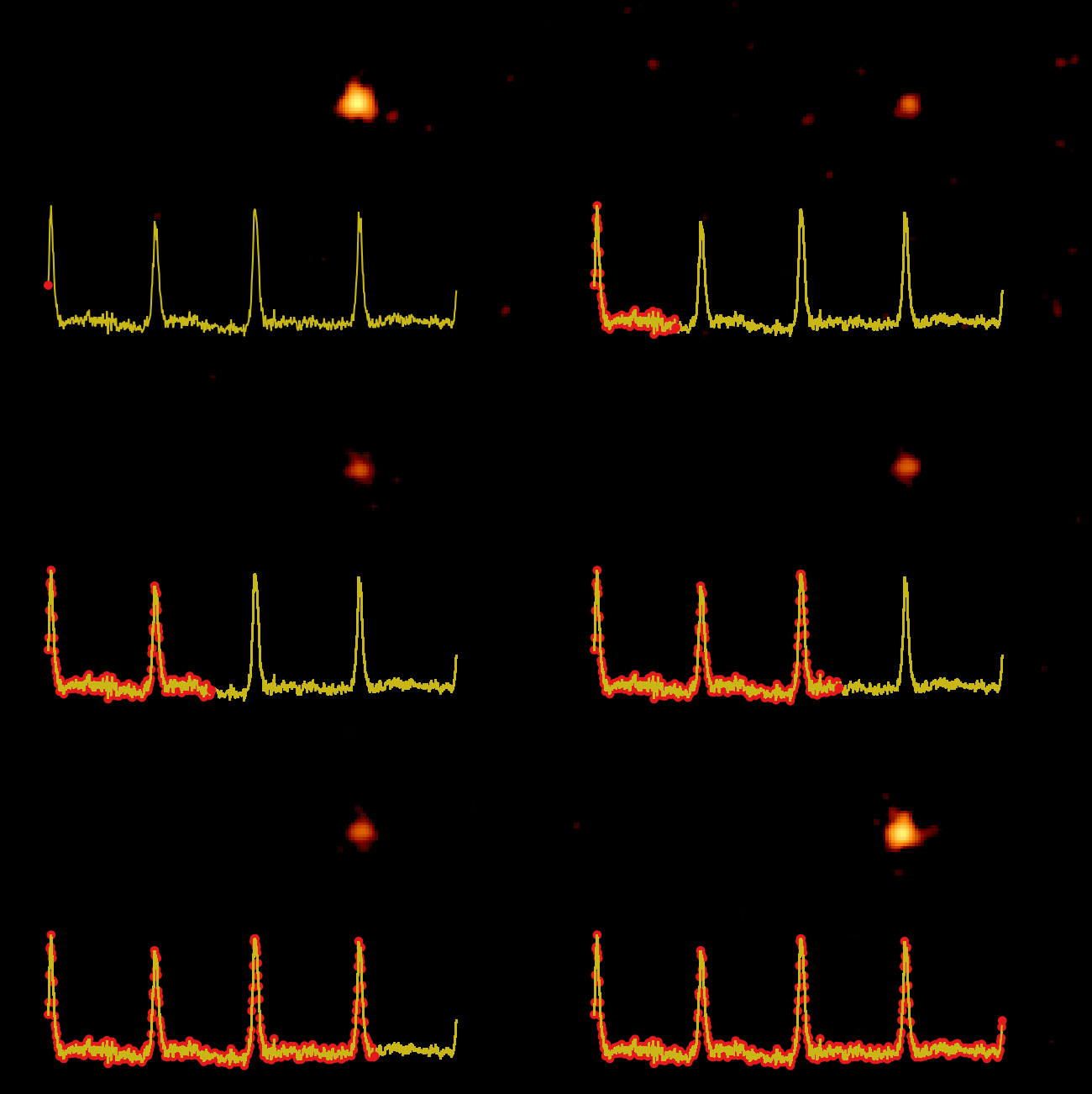
ESA’s X-ray space telescope XMM-Newton has detected never-before-seen periodic flares of X-ray radiation coming from a distant galaxy that could help explain some enigmatic behaviours of active black holes. XMM-Newton, the most powerful X-ray observatory, discovered some mysterious flashes from... Continue Reading →

Ever since the discovery of the first exoplanet in the 1990s, astronomers have made steady progress towards finding and probing planets located in the habitable zone of their stars, where conditions can lead to the formation of liquid water and... Continue Reading →

These cosmic dust clouds drift some 1,300 light-years away along the fertile starfields of the constellation Cepheus. The beautiful Iris Nebula, also known as NGC 7023, blossoms at the upper left. Not the only nebula in the sky to evoke the imagery... Continue Reading →
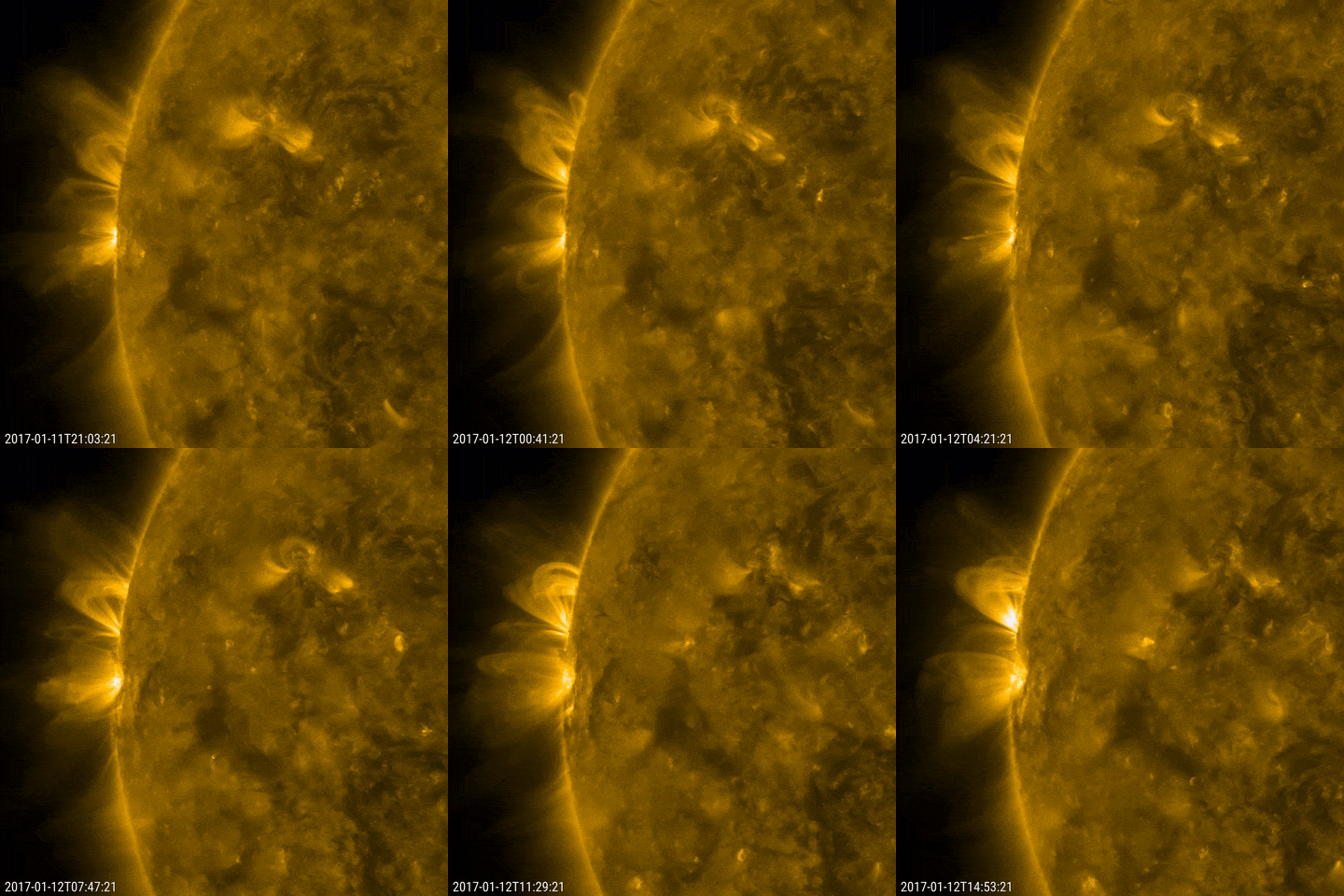
Magnetic arcs of plasma that spiraled above two active regions held their shape fairly well over 18 hours (Jan. 11-12, 2017). The charged plasma is being controlled by the magnetic field lines of the active regions. The field lines become... Continue Reading →
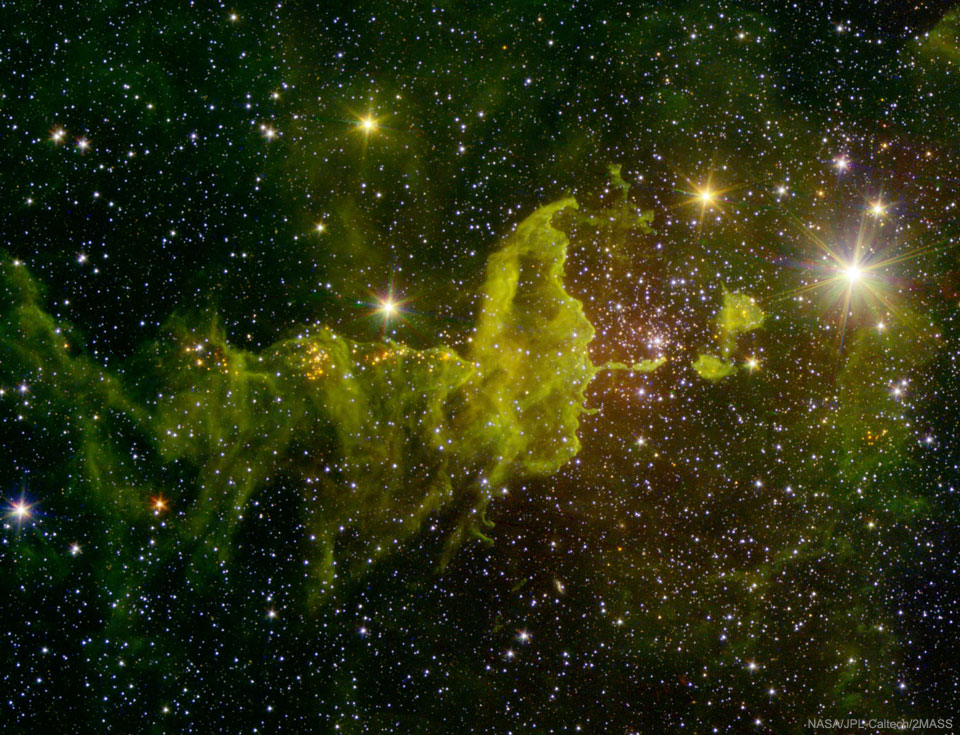
Will the spider ever catch the fly? Not if both are large emission nebulas toward the constellation of the Charioteer (Auriga). The spider-shaped gas cloud on the left is actually an emission nebula labelled IC 417, while the smaller fly-shaped cloud on the right... Continue Reading →

While hunting for comets in the skies above 18th century France, astronomer Charles Messier diligently kept a list of the things he encountered that were definitely not comets. This is number 27 on his now famous not-a-comet list. In fact, 21st century astronomers... Continue Reading →
 Scents of Science