
Rochester Institute of Technology and the Instituto Argentino de Radioastronomía (IAR) have collaborated to make the first pulsar observations from South America. A new paper published in Astronomy and Astrophysics outlines how the team upgraded two radio telescopes in Argentina that lay... Continue Reading →

Astronomers using ESO's Very Large Telescope have observed reservoirs of cool gas around some of the earliest galaxies in the Universe. These gas halos are the perfect food for supermassive black holes at the centre of these galaxies, which are... Continue Reading →
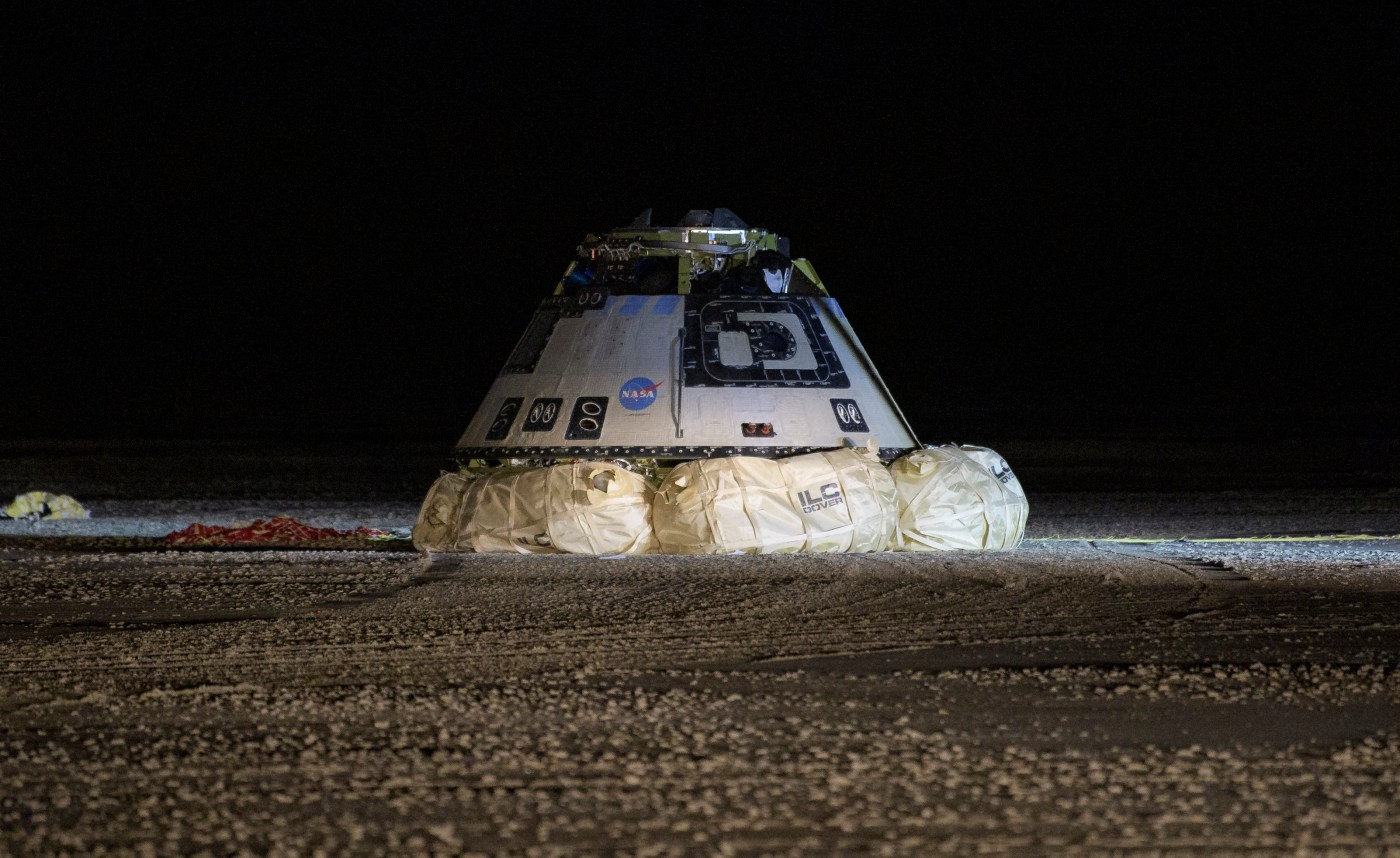
Boeing’s CST-100 Starliner spacecraft completed the first land touchdown of a human-rated capsule in U.S. history Sunday at White Sands Space Harbor in New Mexico, wrapping up the company’s uncrewed Orbital Flight Test as part of NASA’s Commercial Crew Program. Starliner... Continue Reading →
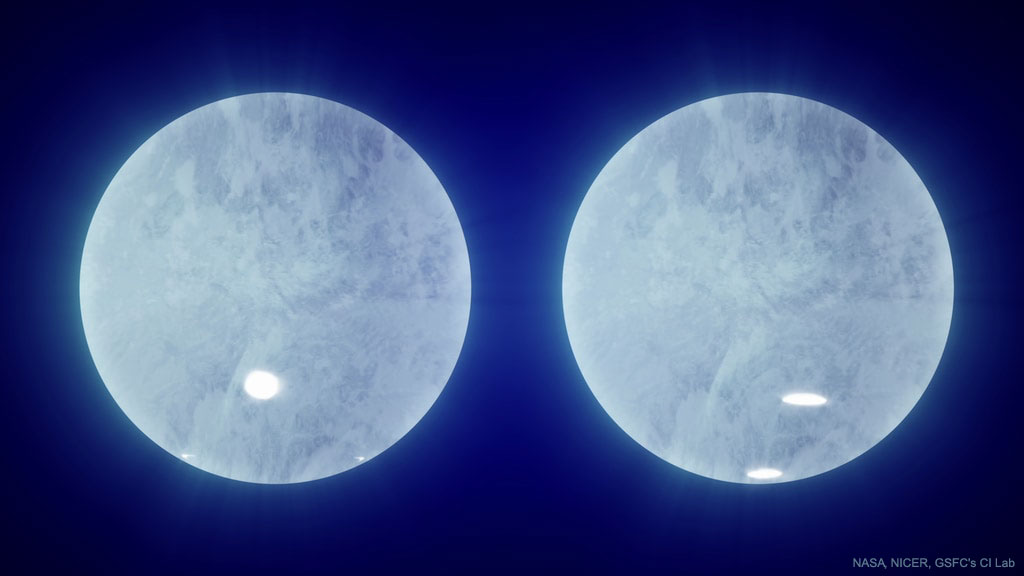
What do neutron stars look like? Previously these city-sized stars were too small and too far away to resolve. Recently, however, the first maps of the locations and sizes of hotspots on a neutron star's surface have been made by carefully modeling how the rapid spin... Continue Reading →
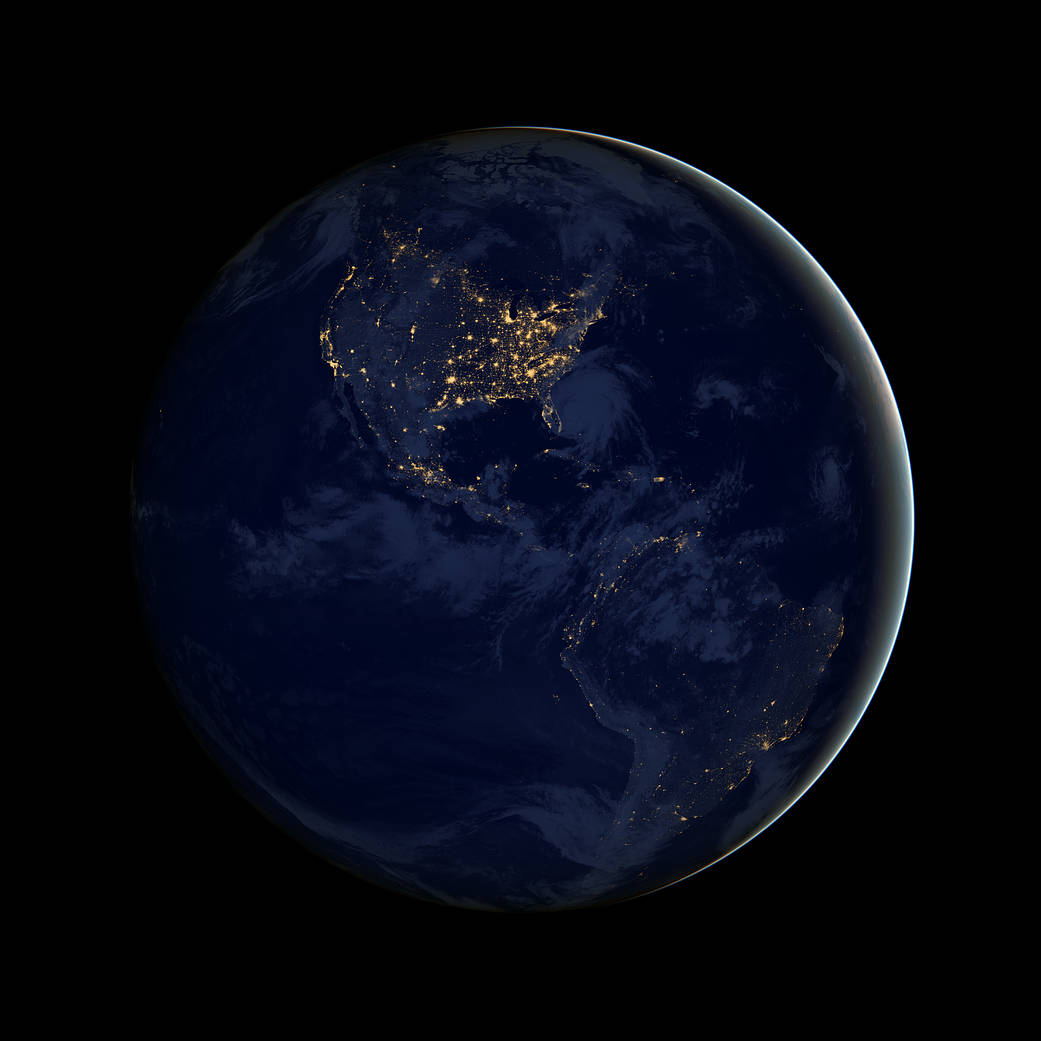
This image of North and South America at night is a composite assembled from data acquired by the Suomi NPP satellite in April and October 2012. The new data was mapped over existing Blue Marble imagery of Earth to provide a realistic view of... Continue Reading →

Astrophysicists are redrawing the textbook image of pulsars, the dense, whirling remains of exploded stars, thanks to NASA’s Neutron star Interior Composition Explorer (NICER), an X-ray telescope aboard the International Space Station. Using NICER data, scientists have obtained the first precise and... Continue Reading →

NASA has big plans for returning astronauts to the Moon in 2024, a stepping stone on the path to sending humans to Mars. But where should the first people on the Red Planet land? A new paper published in Geophysical Research... Continue Reading →

In August 2018, NASA's Parker Solar Probe launched to space, soon becoming the closest-ever spacecraft to the Sun. With cutting-edge scientific instruments to measure the environment around the spacecraft, Parker Solar Probe has completed three of 24 planned passes through... Continue Reading →

Saturn's gravity exerts tidal forces on Enceladus, which cause heating and cooling of the tiny world. Those forces are strongest at the poles. As liquid water solidifies into ice under the outer ice shell, it expands in volume, putting pressure... Continue Reading →
 Scents of Science