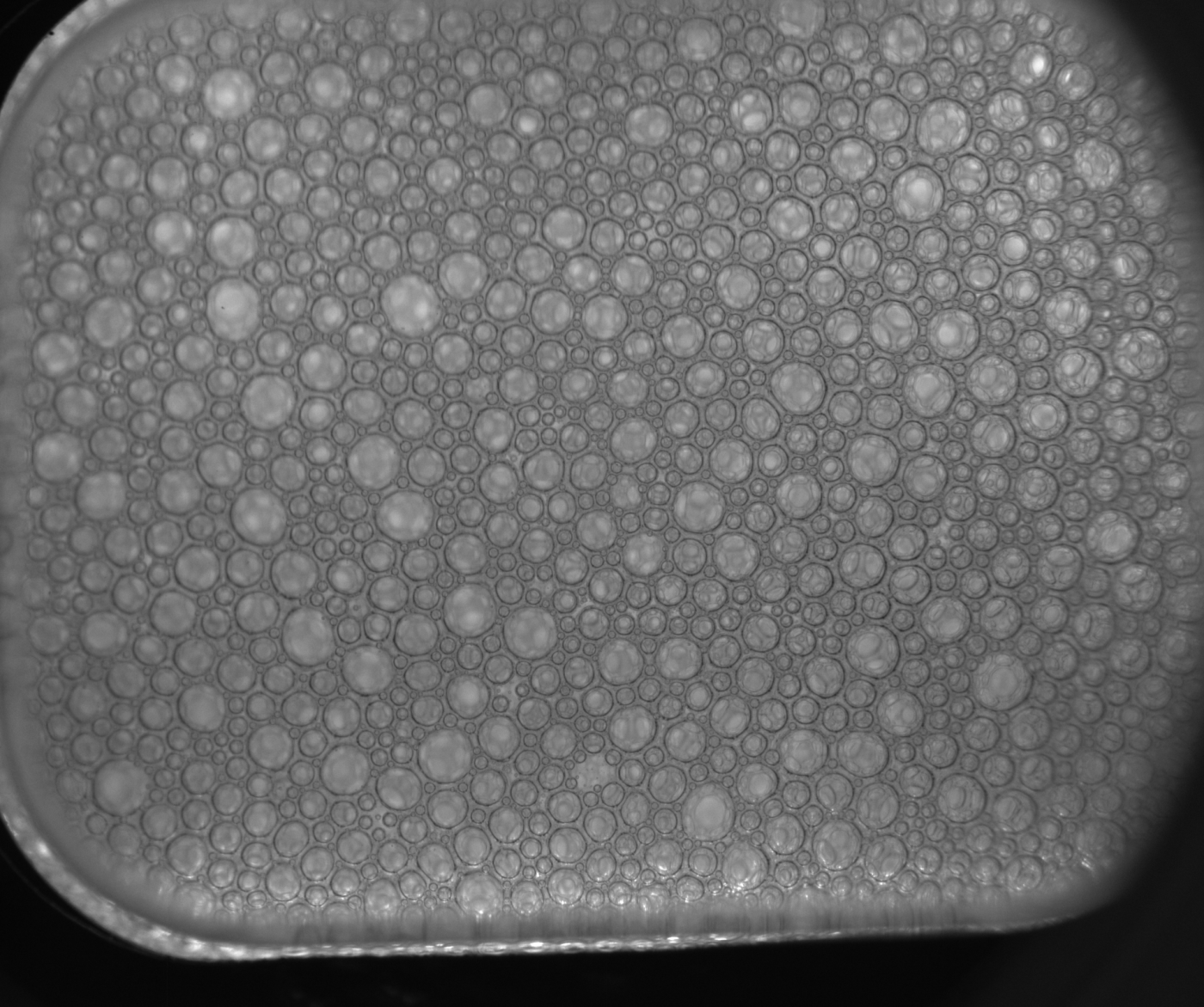
Installed on Friday in the International Space Station and sending down images by Monday. This picture shows one of the first images of foam formed inside the Fluid Science Laboratory in Europe’s space laboratory Columbus. The Foam-Coarsening experiment, developed by... Continue Reading →

What's happening in the center of nearby spiral galaxy M77? The face-on galaxy lies a mere 47 million light-years away toward the constellation of the Sea Monster (Cetus). At that estimated distance, this gorgeous island universe is about 100 thousand light-years across. Also known... Continue Reading →

Researchers using ESO's Very Large Telescope (VLT) have observed an extreme planet where they suspect it rains iron. The ultra-hot giant exoplanet has a day side where temperatures climb above 2400 degrees Celsius, high enough to vaporise metals. Strong winds... Continue Reading →
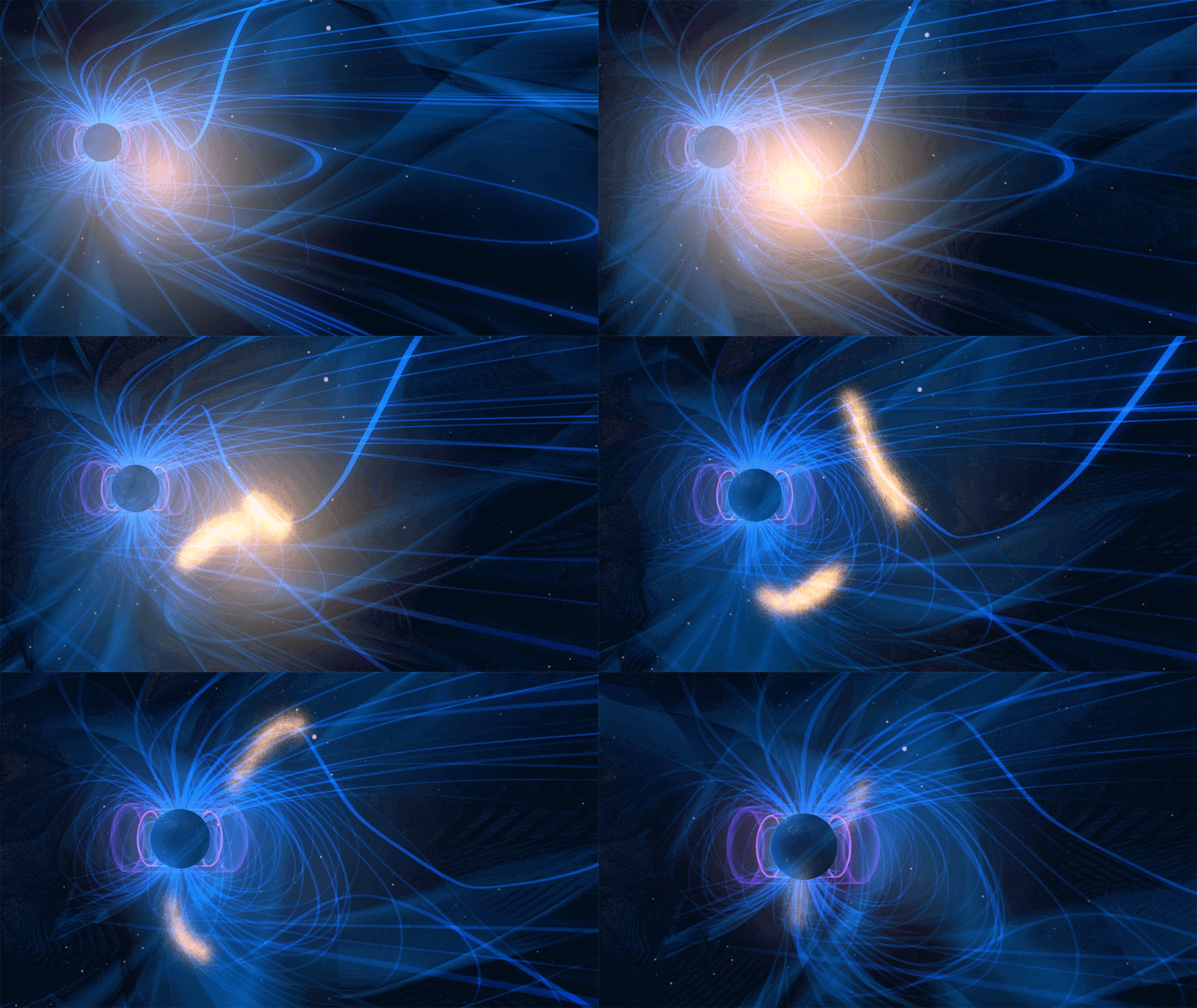
Since its launch on March 12, 2015, NASA’s Magnetospheric Multiscale Mission, or MMS, has been making new discoveries as it flies around Earth studying magnetic reconnection — the explosive snapping and forging of magnetic field lines, at the heart of... Continue Reading →
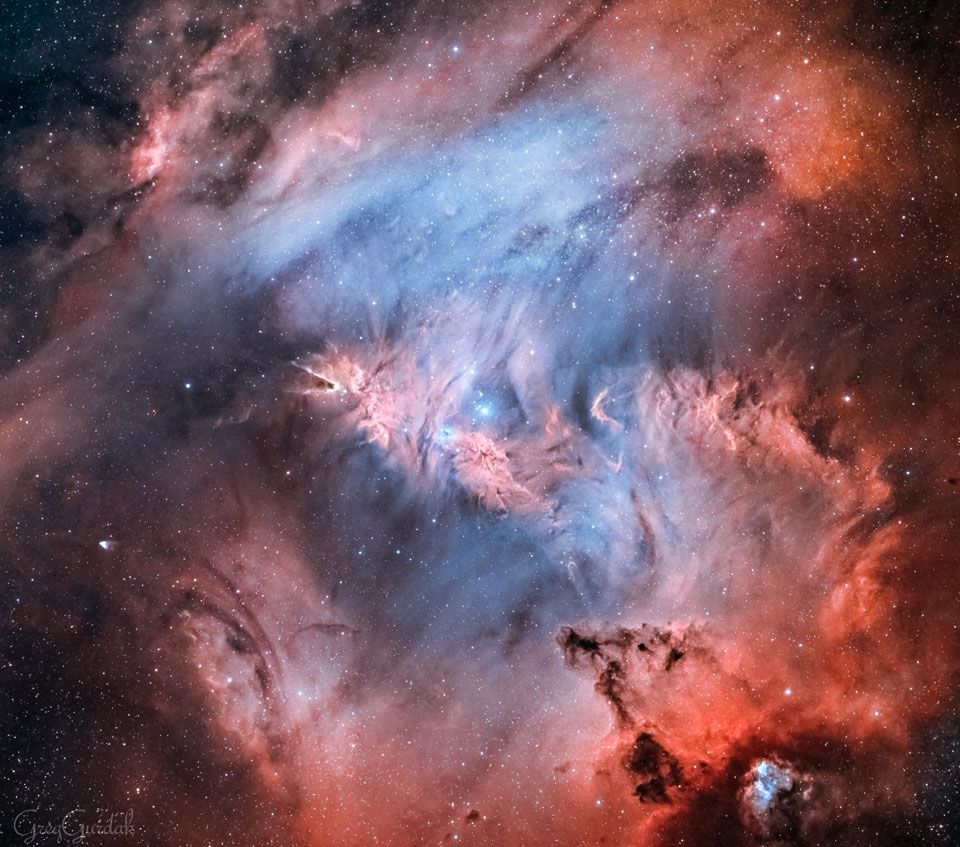
What do the following things have in common: a cone, the fur of a fox, and a Christmas tree? Answer: they all occur in the constellation of the unicorn (Monoceros). Pictured as a star forming region and cataloged as NGC 2264,... Continue Reading →
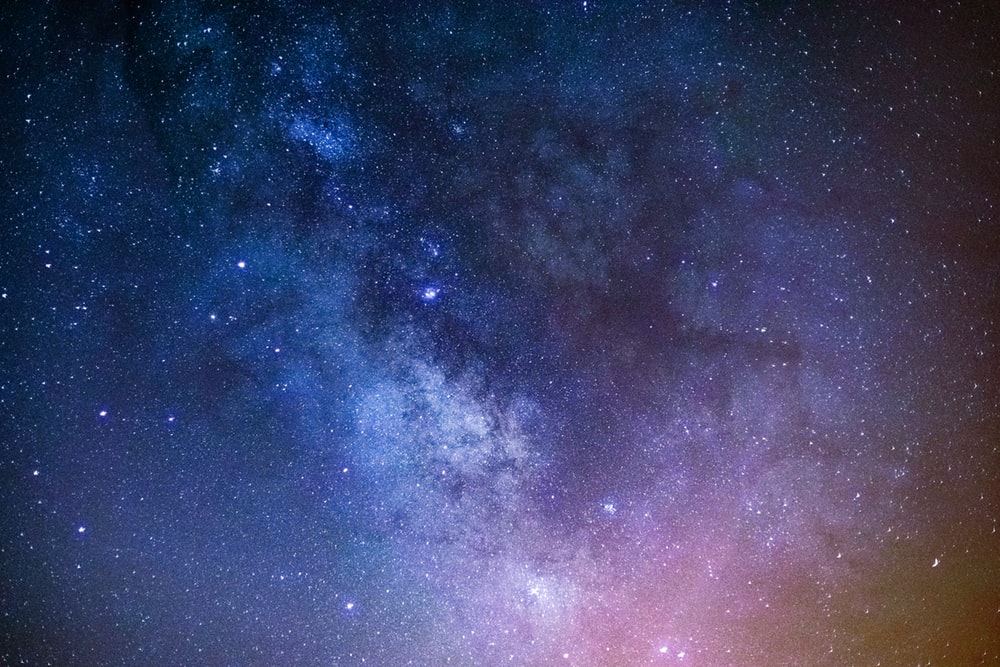
Astronomers have recently raised concerns about the impact of satellite mega-constellations on scientific research. To better understand the effect these constellations could have on astronomical observations, ESO commissioned a scientific study of their impact, focusing on observations with ESO telescopes... Continue Reading →
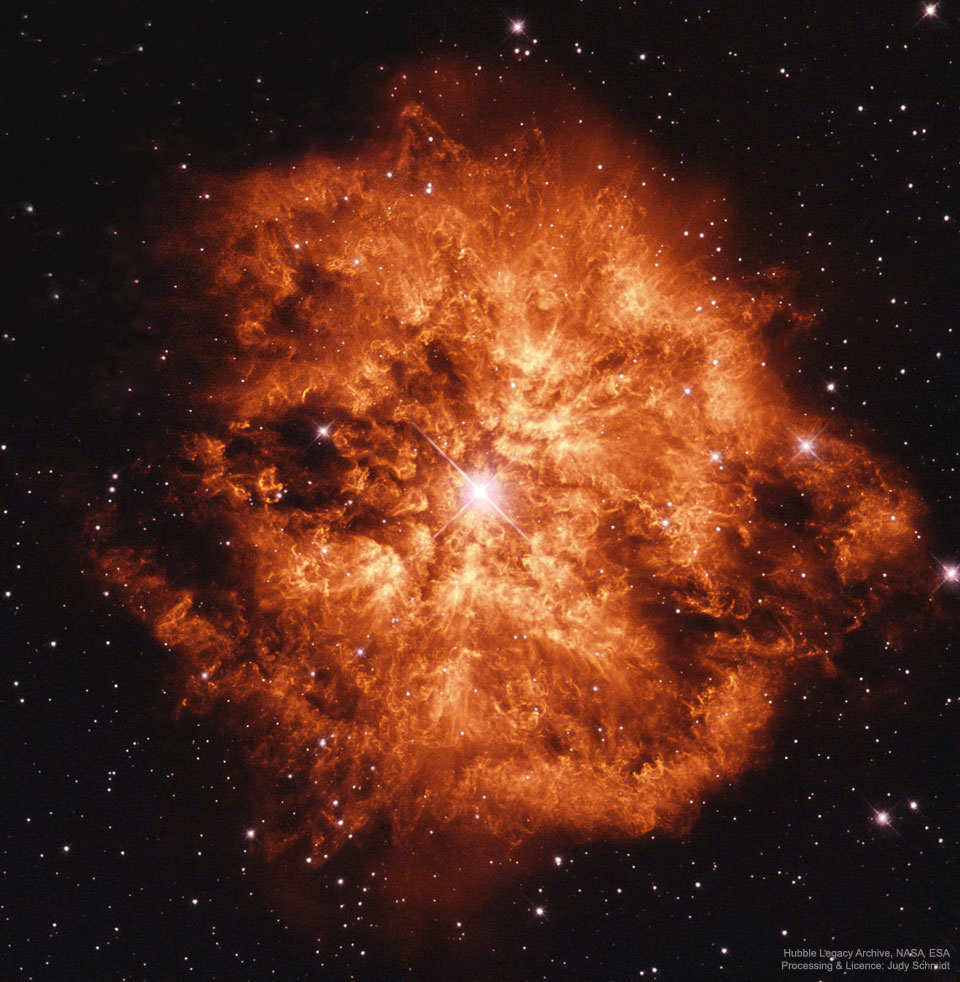
Some stars explode in slow motion. Rare, massive Wolf-Rayet stars are so tumultuous and hot that they are slowly disintegrating right before our telescopes. Glowing gas globs each typically over 30 times more massive than the Earth are being expelled by violent stellar winds. Wolf-Rayet star WR... Continue Reading →
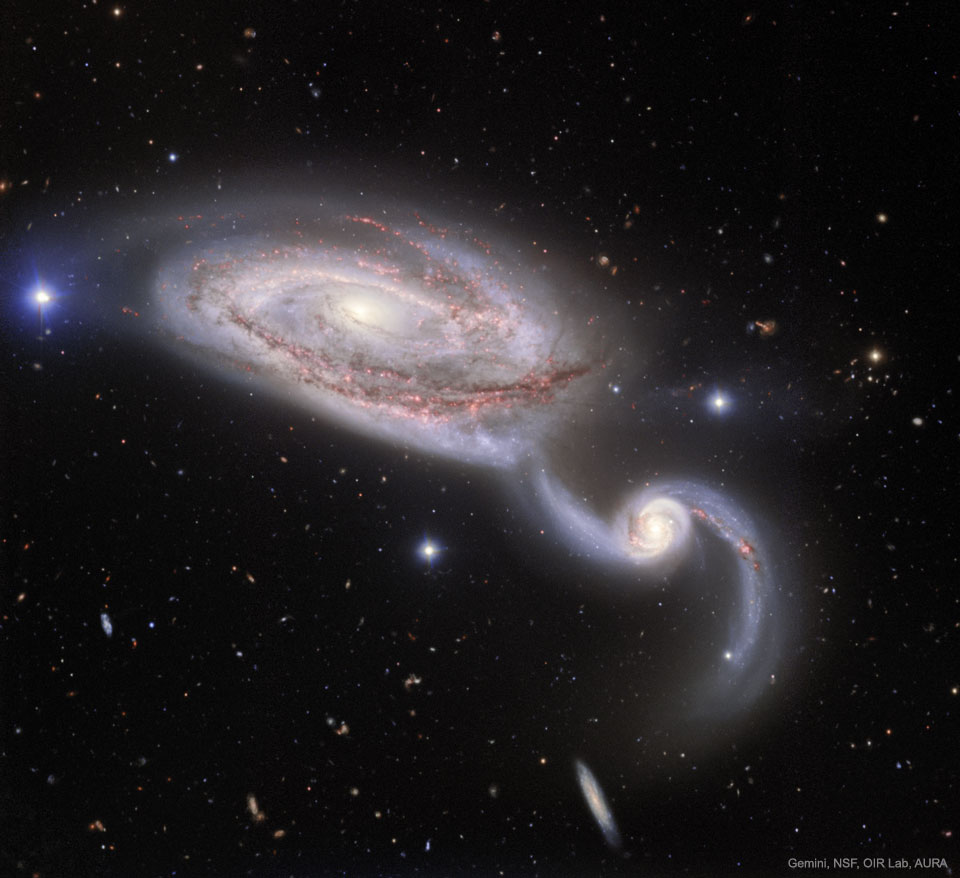
If you like slow dances, then this may be one for you. A single turn in this dance takes several hundred million years. Two galaxies, NGC 5394 and NGC 5395, slowly whirl about each other in a gravitational interaction that sets off a flourish... Continue Reading →

Blown by fast winds from a hot, massive star, this cosmic bubble is much larger than the dolphin it appears to be. Cataloged as Sharpless 2-308 it lies some 5,200 light-years away toward the constellation of the Big Dog (Canis Major) and... Continue Reading →
 Scents of Science