
The Moon makes a stunning backdrop for the successful launch of the third in a series of polar-orbiting weather satellites for the National Oceanic and Atmospheric Administration (NOAA) and our Low-Earth Orbit Flight Test of an Inflatable Decelerator (LOFTID) on Nov. 10 at 4:49... Continue Reading →

The mysterious blue reflection nebula found in catalogs as VdB 152 or Ced 201 really is very faint. It lies at the tip of the long dark nebula Barnard 175 in a dusty complex that has also been called Wolf's Cave. At the center of this deep... Continue Reading →
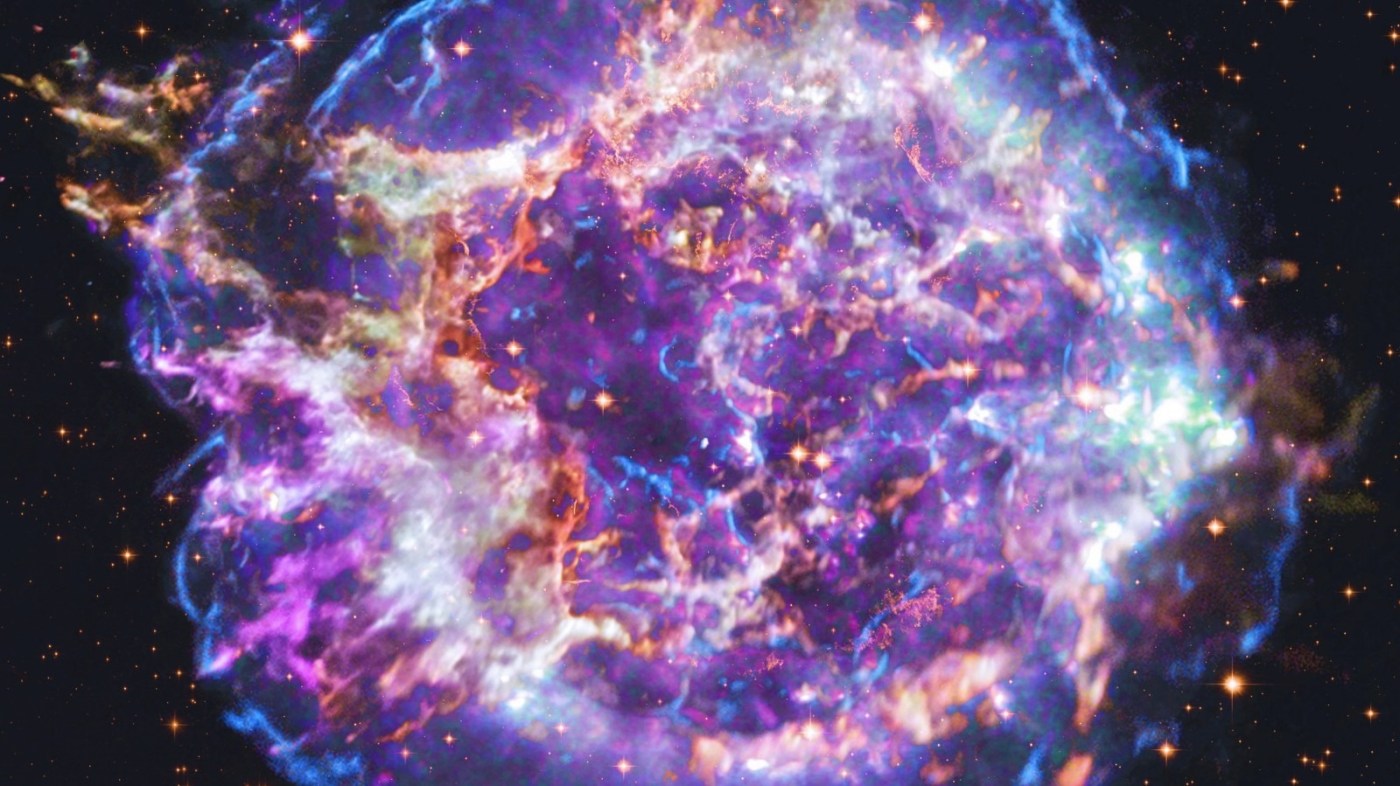
An international research team led by the University of Minnesota Twin Cities has measured the size of a star dating back 2 billion years after the Big Bang, or more than 11 billion years ago. Detailed images show the exploding... Continue Reading →

The beginning, middle, and end of a journey through planet Earth's colorful umbral shadow is captured in this timelapse composite image of a total lunar eclipse. Taken on November 8 from Kitt Peak National Observatory this eclipse's 1 hour and 25 minute long total phase starts... Continue Reading →
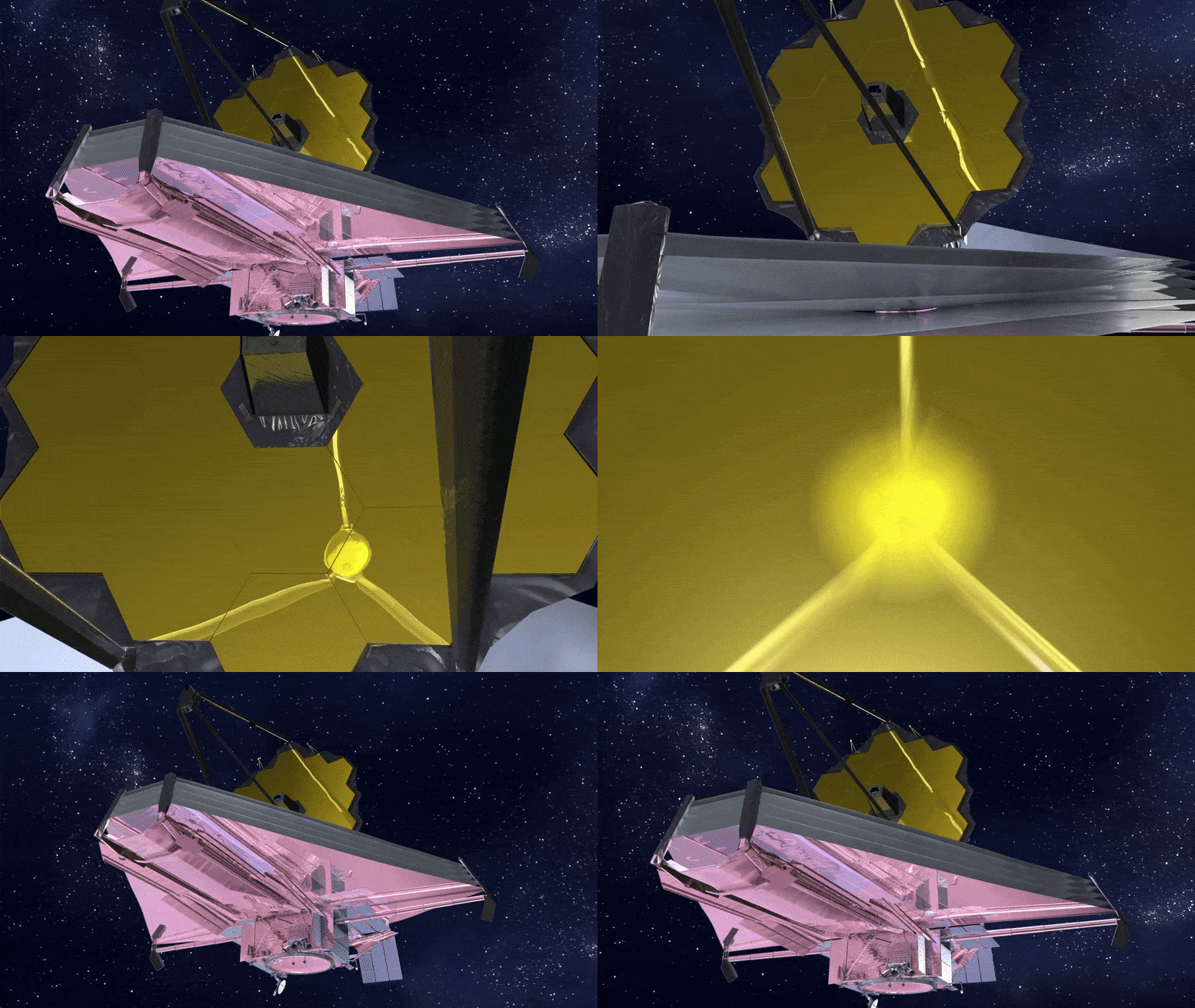
The NASA/ESA/CSA James Webb Space Telescope is widely referred to as the successor to the NASA/ESA Hubble Space Telescope. In reality, it is the successor to a lot more than that. With the inclusion of the Mid-InfraRed Instrument (MIRI), Webb also became a successor... Continue Reading →

Why does the nebula around the star WR-18 shine brighter on one side? Also known as NGC 3199, this active star and its surrounding nebula lie about 12,000 light-years away toward the nautical southern constellation of Carina. The featured deep image has been highly processed to... Continue Reading →

How many galaxies are interacting here? This grouping of galaxies is called the Wild Triplet, not only for the discoverer, but for the number of bright galaxies that appear. It had been assumed that all three galaxies, collectively cataloged as Arp 248, are interacting, but... Continue Reading →
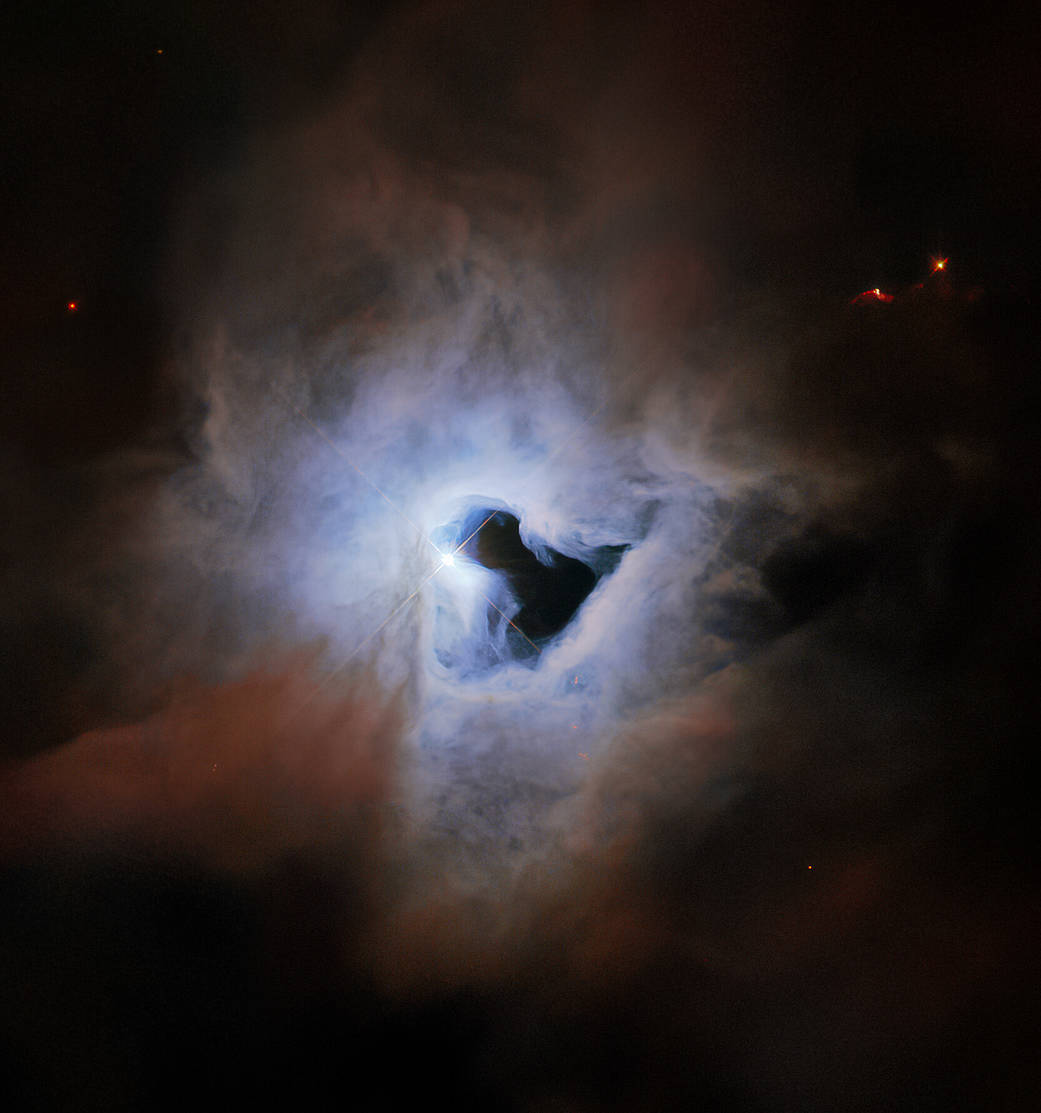
This peculiar portrait from the NASA/ESA Hubble Space Telescope showcases NGC 1999, a reflection nebula in the constellation Orion. NGC 1999 is around 1,350 light-years from Earth and lies near the Orion Nebula, the closest region of massive star formation... Continue Reading →

The Mars InSight lander returned its first image from the Red Planet's flat, equatorial Elysium Planitia after a successful touchdown on November 26, 2018. The history making mission to explore the martian Interior using Seismic investigations, geodesy, and heat transport has been operating for over 1,400... Continue Reading →
 Scents of Science