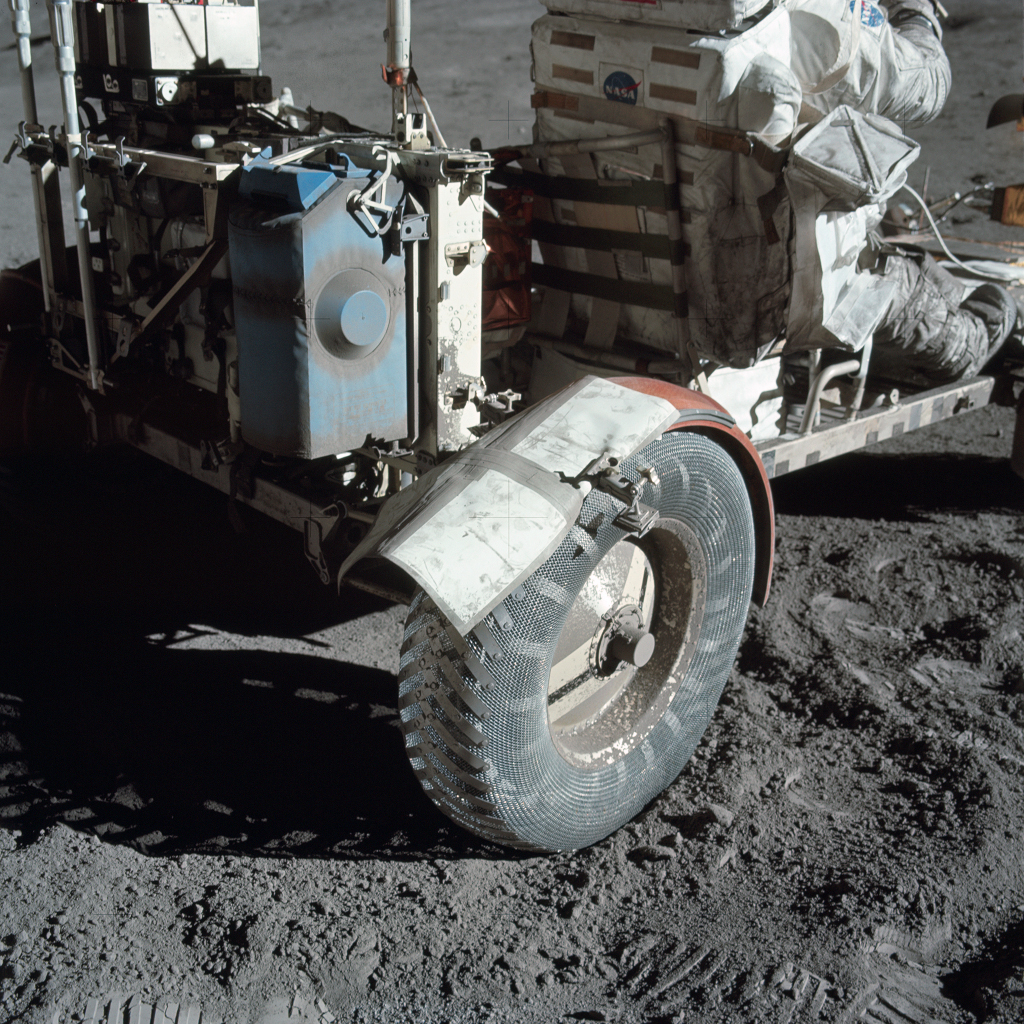
Why is the Moon so dusty? On Earth, rocks are weathered by wind and water, creating soil and sand. On the Moon, the history of constant micrometeorite bombardment has blasted away at the rocky surface creating a layer of powdery lunar soil... Continue Reading →
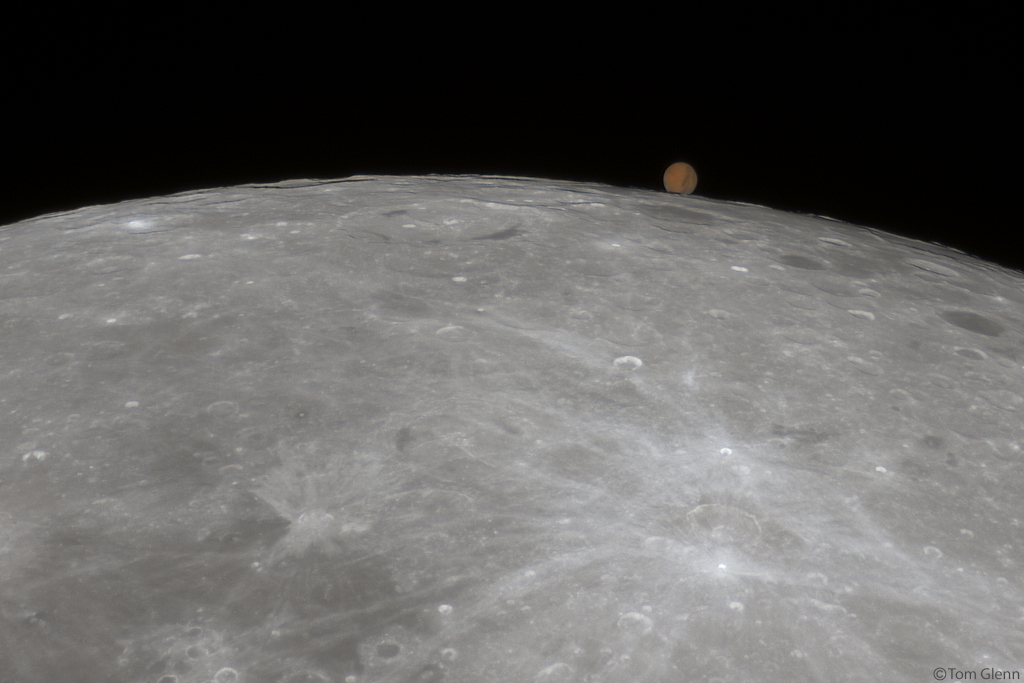
On the night of December 7 Mars wandered near the Full Moon. In fact the Red Planet was occulted, passing behind the Moon, when viewed from locations across Europe and North America. About an hour after disappearing behind the lunar disk Mars reappears... Continue Reading →

A camera on board the uncrewed Orion spacecraft captured this view on December 5 as Orion approached its return powered flyby of the Moon. Below one of Orion's extended solar arrays lies dark, smooth, terrain along the western edge of the Oceanus Procellarum. Prominent... Continue Reading →

A mere seven hundred light years from Earth, toward the constellation Aquarius, a sun-like star is dying. The dying star's last few thousand years have produced the Helix Nebula (NGC 7293), a well studied and nearby example of a Planetary Nebula, typical of this... Continue Reading →

What’s happening inside this interstellar mountain? Stars are forming. The mountain is actually a column of gas and dust in the picturesque Eagle Nebula (M16). A pillar like this is so low in density that you could easily fly though it -- it only appears solid because of... Continue Reading →
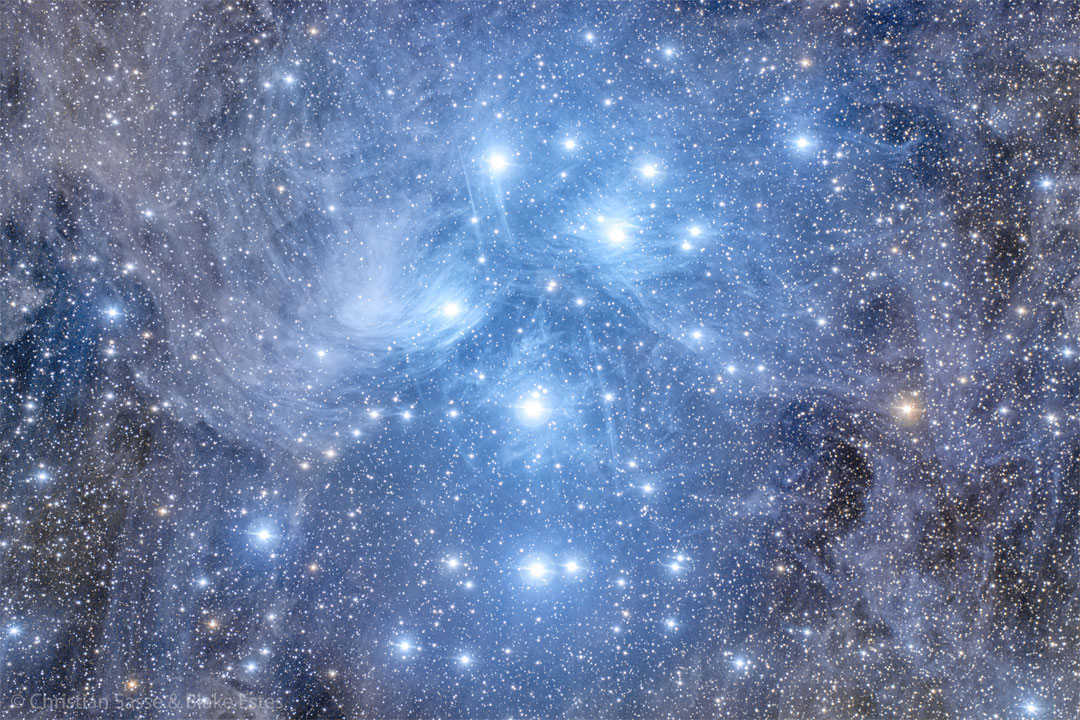
Have you ever seen the Pleiades star cluster? Even if you have, you probably have never seen it as large and clear as this. Perhaps the most famous star cluster on the sky, the bright stars of the Pleiades can be seen... Continue Reading →

Bright at infrared wavelengths, this merging galaxy pair is some 500 million light-years away toward the constellation Delphinus. The cosmic mashup is seen against a background of even more distant galaxies, and occasional spiky foreground stars. But the galaxy merger itself spans about 100,000... Continue Reading →

This colorful skyscape spans about four full moons across nebula rich starfields along the plane of our Milky Way Galaxy in the royal northern constellation Cepheus. Near the edge of the region's massive molecular cloud some 2,400 light-years away, bright reddish emission... Continue Reading →

During Artemis I, NASA’s Space Launch System (SLS) rocket will send the agency’s Orion spacecraft on a trek 40,000 miles beyond the Moon before returning to Earth. To capture the journey, the rocket and spacecraft are equipped with cameras that will... Continue Reading →
 Scents of Science