
Can dust be beautiful? Yes, and it can also be useful. The Taurus molecular cloud has several bright stars, but it is the dark dust that really draws attention. The pervasive dust has waves and ripples and makes picturesque dust bunnies, but perhaps more importantly, it marks regions where interstellar... Continue Reading →
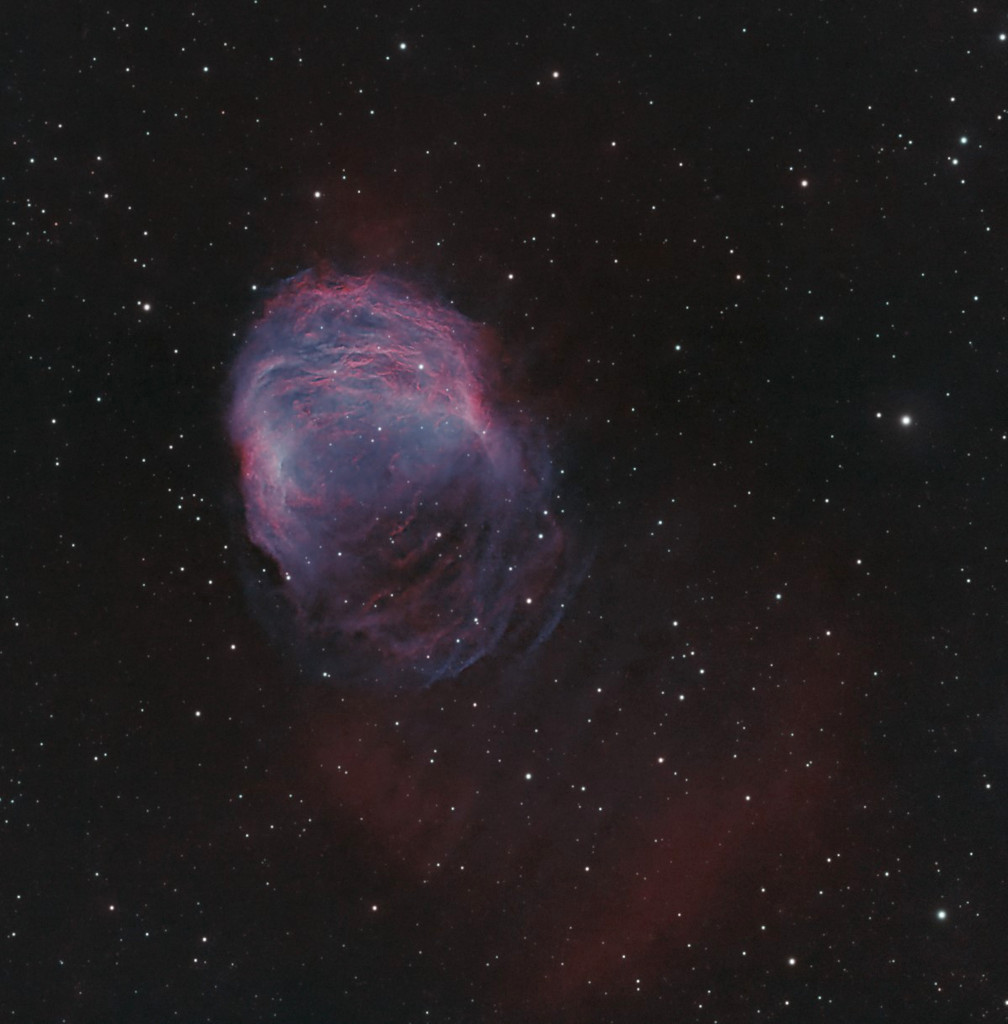
Braided and serpentine filaments of glowing gas suggest this nebula's popular name, The Medusa Nebula. Also known as Abell 21, this Medusa is an old planetary nebula some 1,500 light-years away in the constellation Gemini. Like its mythological namesake, the nebula is associated with... Continue Reading →

The waxing gibbous Moon stands out in this Jan. 2, 2023, image from the International Space Station as it orbited 269 miles above the southern Indian Ocean. In 24 hours, the space station makes 16 orbits of Earth, traveling through 16 sunrises... Continue Reading →
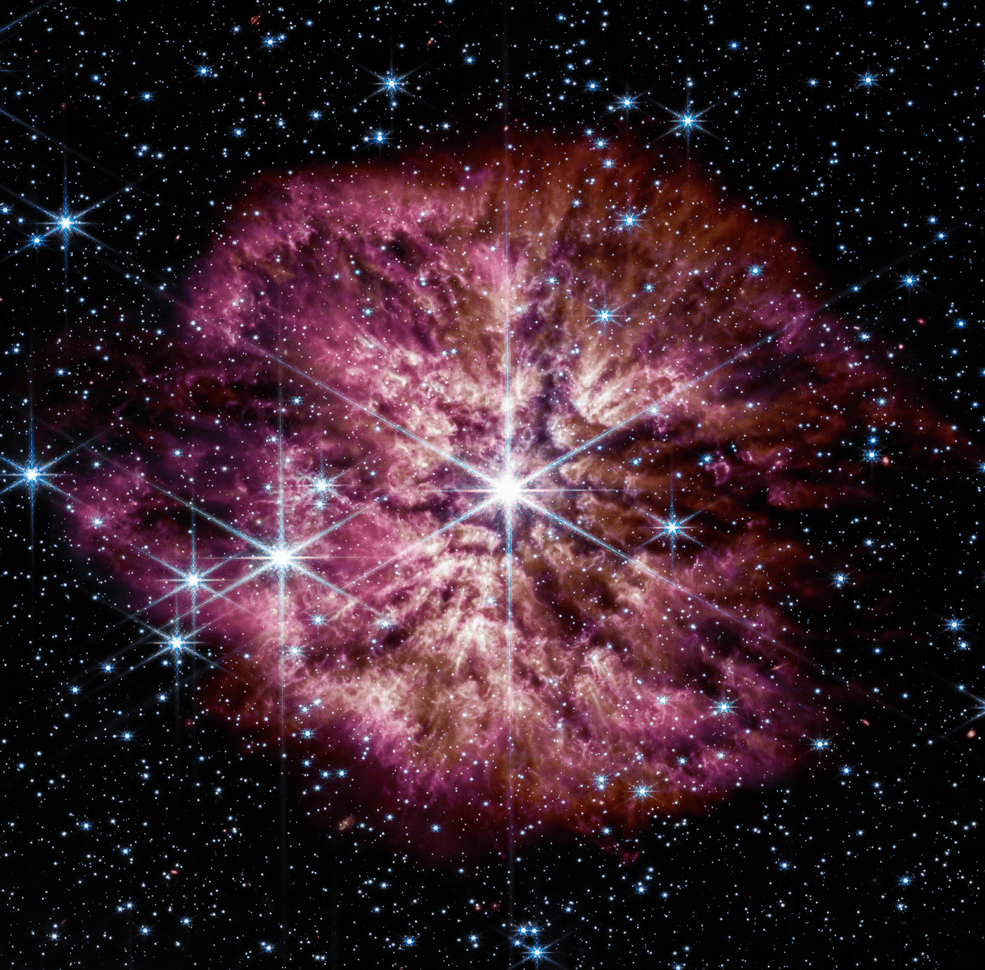
The rare sight of a Wolf-Rayet star – among the most luminous, most massive, and most briefly detectable stars known – was one of the first observations made by NASA’s James Webb Space Telescope in June 2022. Webb shows the... Continue Reading →

Our Sun is becoming a busy place. Only two years ago, the Sun was emerging from a solar minimum so quiet that months would go by without even a single sunspot. In contrast, already this year and well ahead of schedule, our Sun is unusually active, already... Continue Reading →

Researchers using NASA’s James Webb Space Telescope are getting their first look at star formation, gas, and dust in nearby galaxies with unprecedented resolution at infrared wavelengths. The data has enabled an initial collection of 21 research papers which provide... Continue Reading →

Some of the hottest spots in the Sun’s atmosphere appear in the telescope’s X-ray view. Even on a sunny day, human eyes can’t see all the light our nearest star gives off. A new image displays some of this hidden... Continue Reading →

Comet ZTF has a distinctive shape. The now bright comet visiting the inner Solar System has been showing not only a common dust tail, ion tail, and green gas coma, but also an uncommonly distinctive antitail. The antitail does not actually lead the comet -- it is... Continue Reading →

To some, the dark shape looks like a mythical boogeyman. Scientifically, Lynds' Dark Nebula (LDN) 1622 appears against a faint background of glowing hydrogen gas only visible in long telescopic exposures of the region. In contrast, the brighter reflection nebula vdB 62 is... Continue Reading →
 Scents of Science