
Annie and John Glenn arrive at the Mission Control Center for the Gemini IV launch on June 4, 1965. John Glenn was the first American to orbit the Earth. Glenn's wife Annie, who passed away May 19, 2020, was an advocate for people... Continue Reading →

On this day 1953 Francis Crick, James Watson & Rosalind Franklin's discovery of the double helix structure of DNA is published in "Nature" magazine. American biologist James Watson and British physicist Francis Crick came up with their famous model of the... Continue Reading →
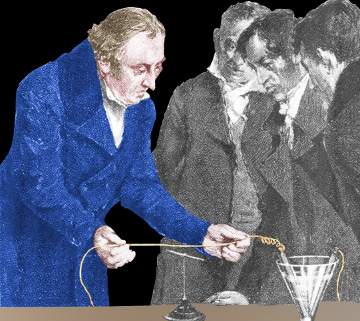
On this day, 1820, danish scientist Hans Christian Ørsted is the first to identify electromagnetism, when he observes a compass needle. He showed by experiment that an electric current flowing through a wire could move a nearby magnet. The discovery... Continue Reading →
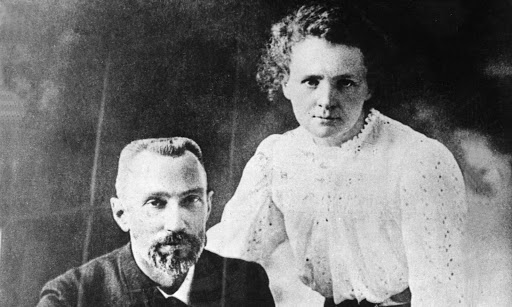
On April 20, 1902, Marie and Pierre Curie successfully isolate radioactive radium salts from the mineral pitchblende in their laboratory in Paris. In 1898, the Curies discovered the existence of the elements radium and polonium in their research of pitchblende.... Continue Reading →

At 2:20 a.m. on April 15, 1912, the British ocean liner Titanic sinks into the North Atlantic Ocean about 400 miles south of Newfoundland, Canada. The massive ship, which carried 2,200 passengers and crew, had struck an iceberg two and half hours... Continue Reading →
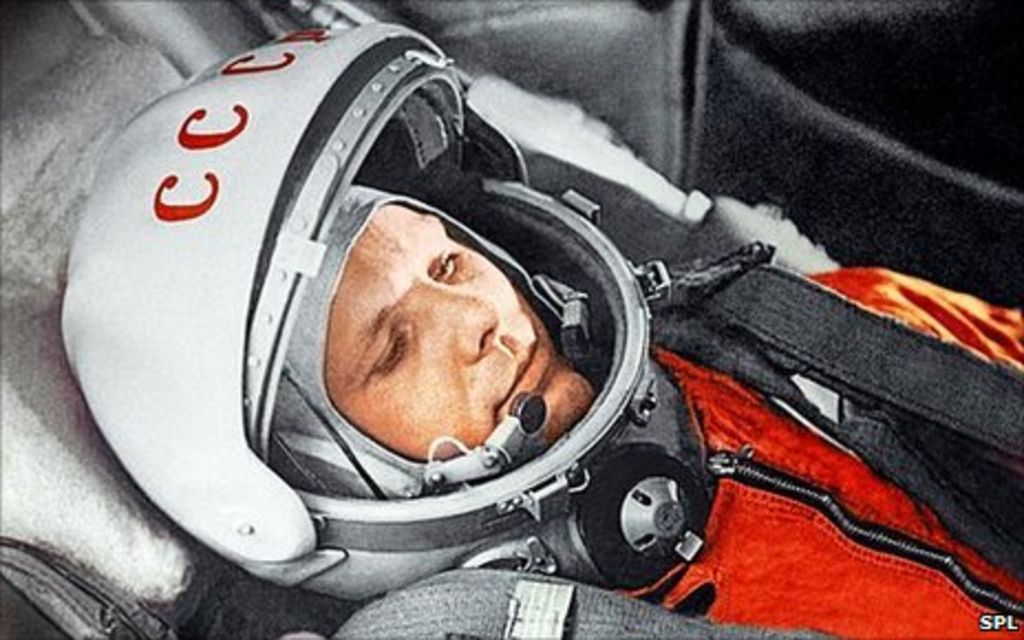
Yuri Gagarin was the first person to fly in space. His flight, on April 12, 1961, lasted 108 minutes as he circled the Earth for a little more than one orbit in the Soviet Union's Vostok spacecraft. Following the flight, Gagarin... Continue Reading →

The Earth of 3.2 billion years ago was a "water world" of submerged continents, geologists say after analyzing oxygen isotope data from ancient ocean crust that's now exposed on land in Australia. And that could have major implications on the... Continue Reading →

In 46 BC Julius Caesar reformed the calendar system. Based on advice by astronomer Sosigenes of Alexandria, the Julian calendar included one leap day every four years to account for the fact that an Earth year is slightly more than 365 days long.... Continue Reading →
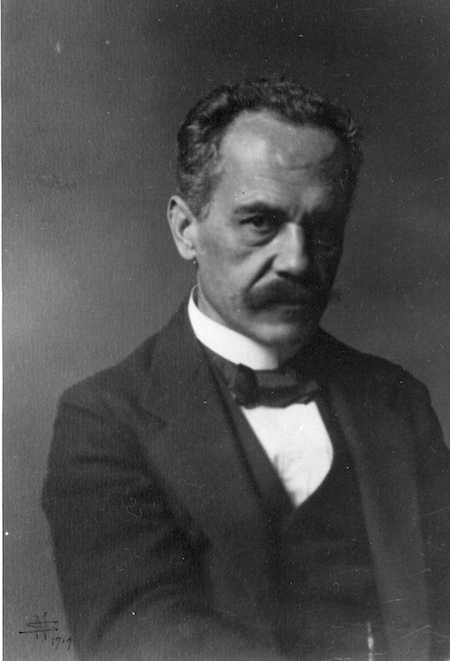
Born on 5 December 1868 in Königsberg, Prussia, theoretical physicist Arnold Sommerfeld was a pioneer of quantum and atomic physics. Sommerfeld started out studying mathematics, earning his PhD from the University of Königsberg in 1891, when he was just 23... Continue Reading →
 Scents of Science