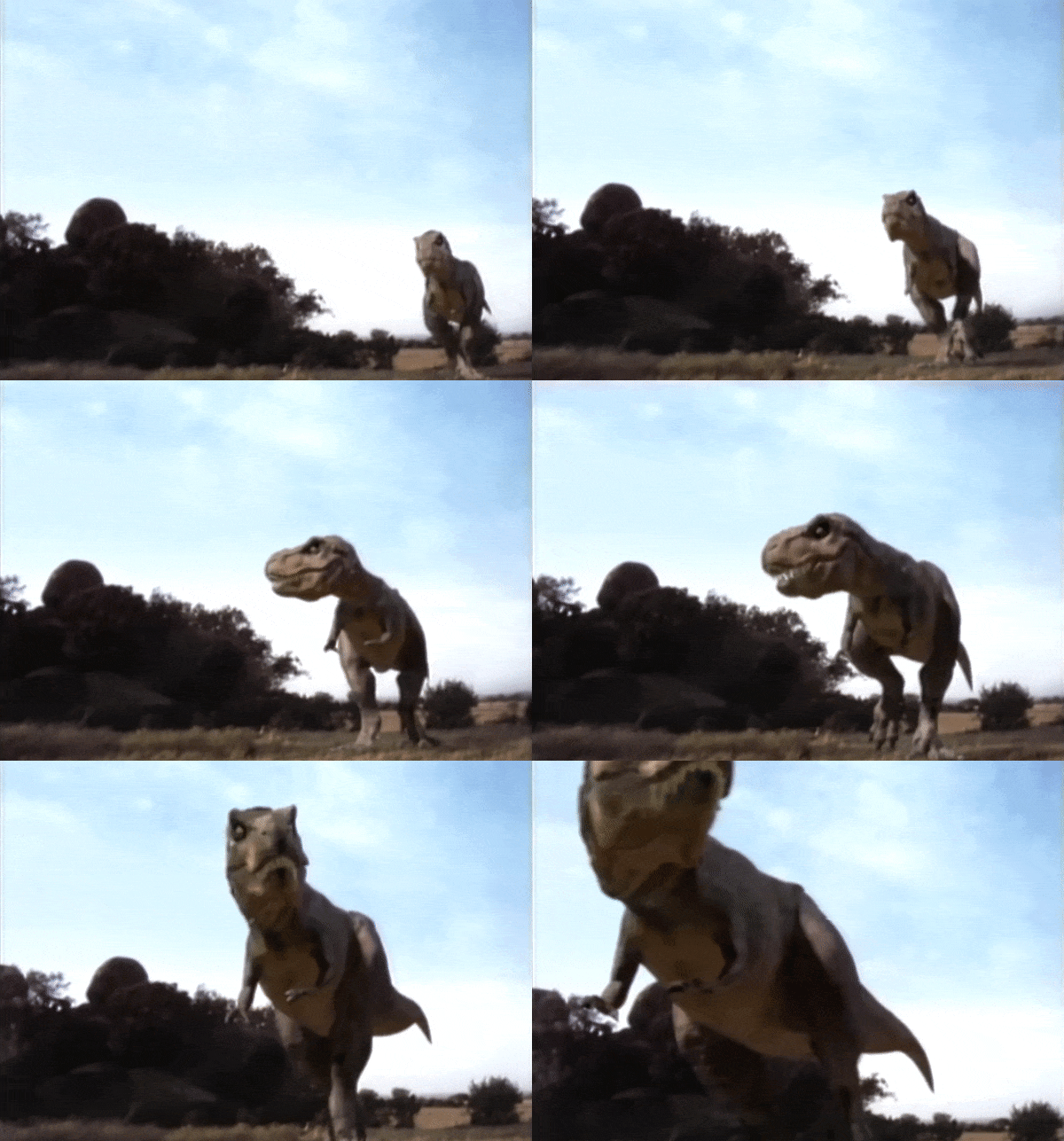
Tyrannosaurus rex, one of the largest meat-eating dinosaurs on the planet, had an air conditioner in its head, suggest scientists from the University of Missouri, Ohio University and University of Florida, while challenging over a century of previous beliefs. In... Continue Reading →
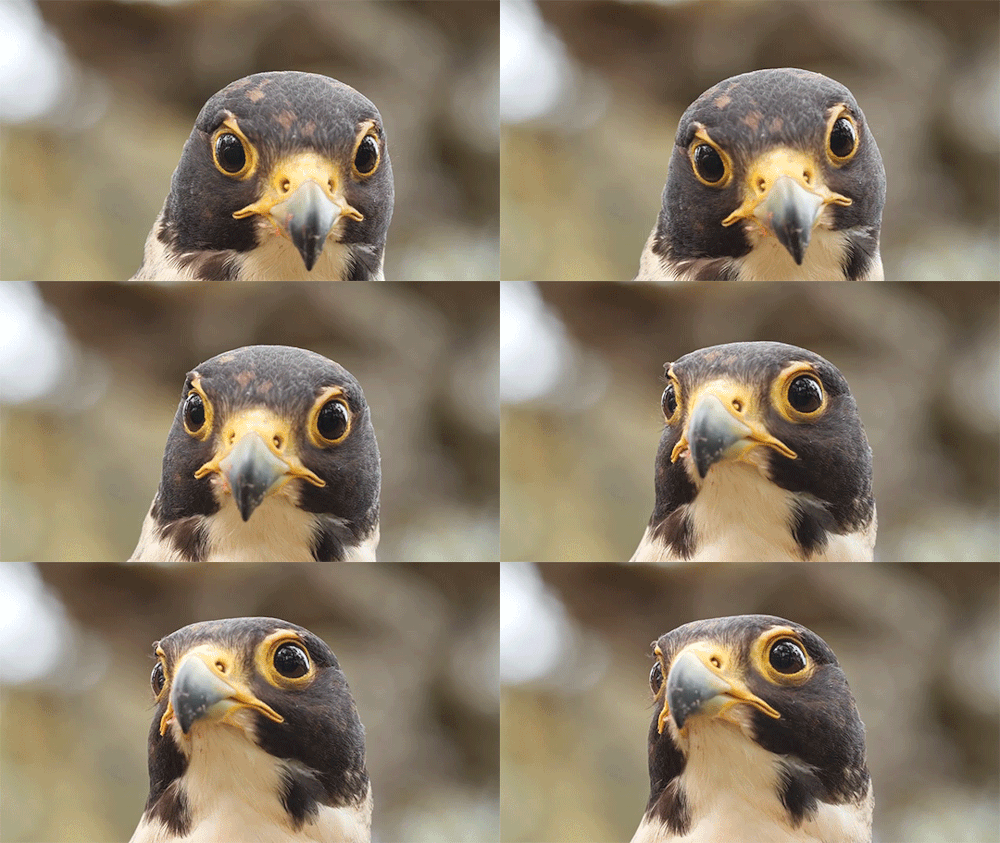
Peregrine falcons are built for speed. They’ve been clocked at more than 380 kilometers per hour when diving. This video from Deep Look examines some of the features that make these birds of prey so fast, from the shape of their eyes to... Continue Reading →
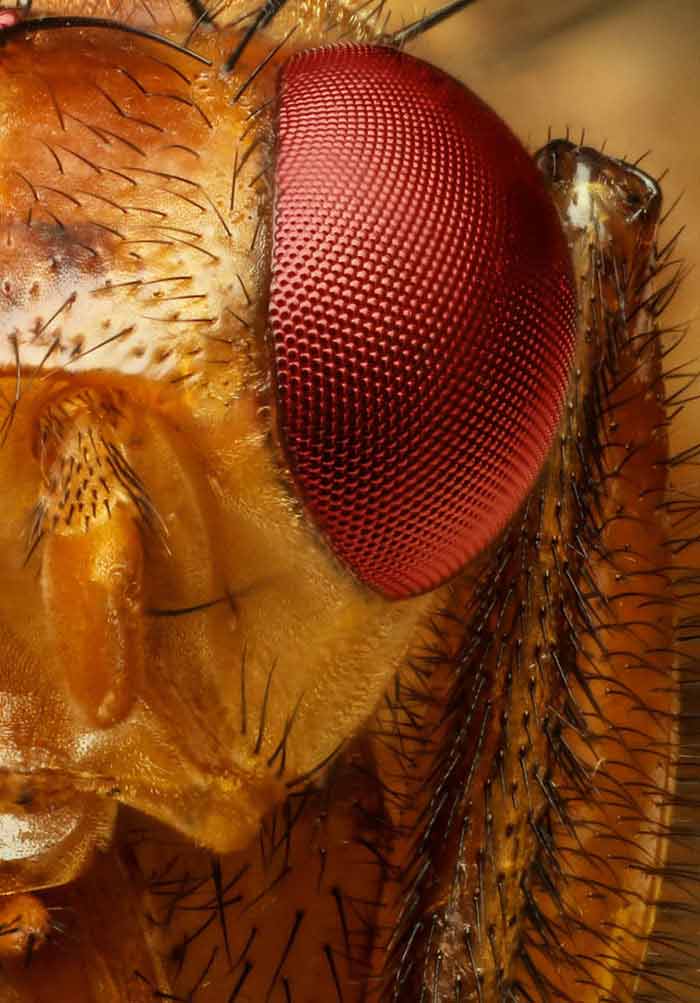
Scientists have known insects experience something like pain since 2003, but new research published today from Associate Professor Greg Neely and colleagues at the University of Sydney proves for the first time that insects also experience chronic pain that lasts... Continue Reading →

What do birds do during a total solar eclipse? Darkness descends more quickly in a total eclipse than during sunset, but returns just as quickly -- and perhaps unexpectedly to the avians -- just a few minutes later. Stories about the unusual... Continue Reading →

These little guys manage to get just about everywhere, thanks in part to their amazing ability to stay windborne for up to 150 km! To do that, the dandelion uses a bristly umbrella of tiny filaments, known as a pappus,... Continue Reading →
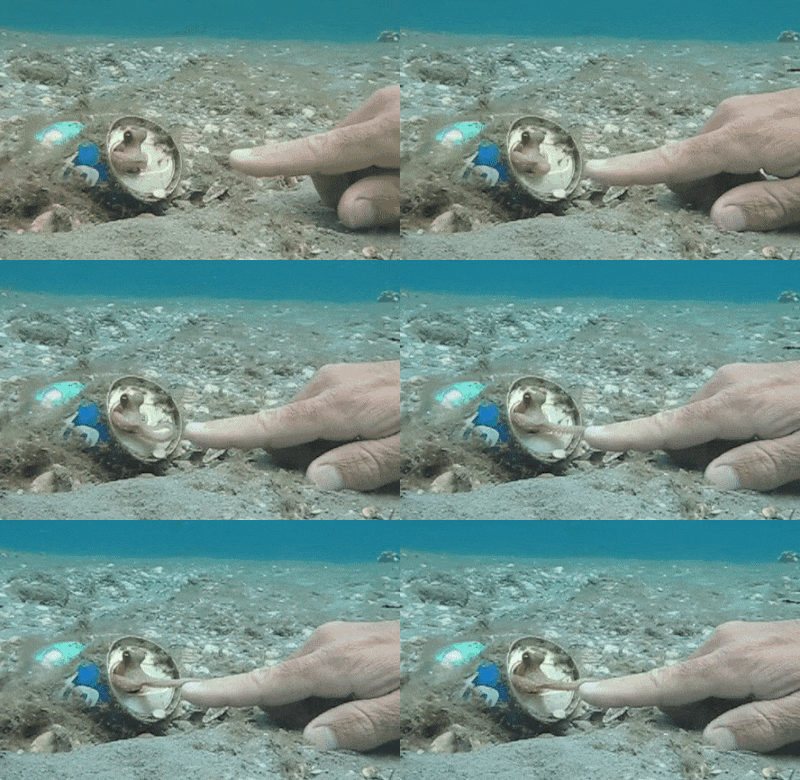
Researchers studying the behavior and neuroscience of octopuses have long suspected that the animals' arms may have minds of their own. A new model being presented in Bellevue, Washington State, is the first attempt at a comprehensive representation of information... Continue Reading →

Scientists have discovered how plants create networks of air channels -- the lungs of the leaf -- to transport carbon dioxide (CO2) to their cells. Botanists have known since the 19th century that leaves have pores -- called stomata --... Continue Reading →

African mole-rats are insensitive to many different kinds of pain. As an international research team led by the MDC's Gary Lewin reports in Science, this characteristic has even allowed mole-rats to populate new habitats. Thanks to a genetic change, the highveld... Continue Reading →
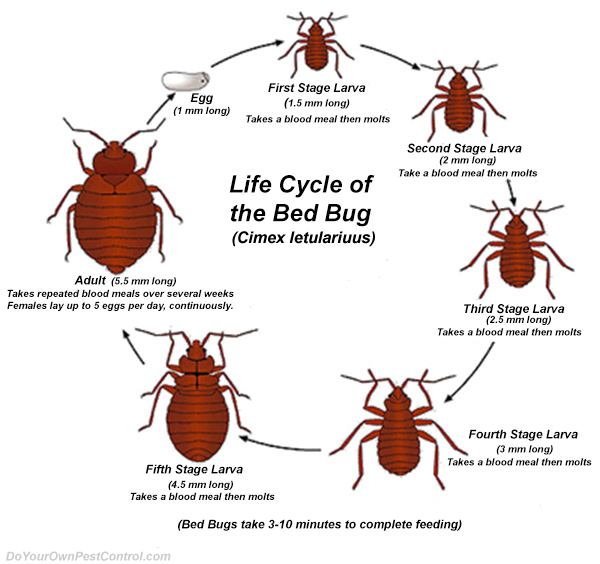
Researchers shed light on the complex evolutionary past of bedbugs.Study finds bedbugs have been parasitic companions with other species aside from humans for more than 100 million years, and were around at the same time as dinosaurs.Experts discover bedbugs are... Continue Reading →
 Scents of Science