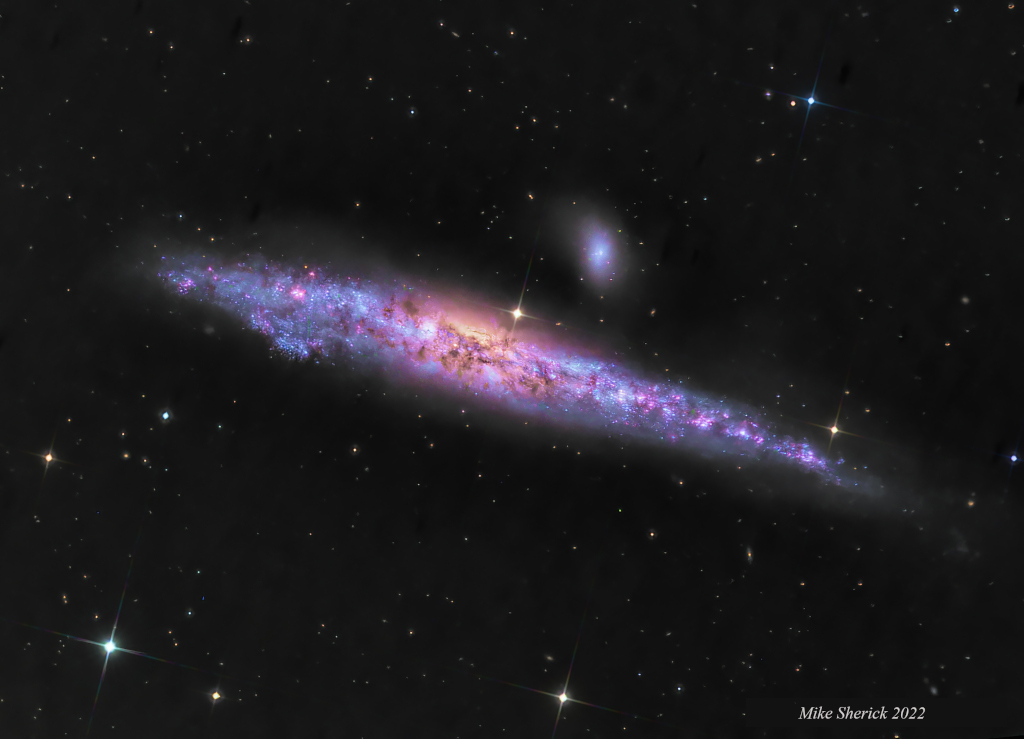
NGC 4631 is a big beautiful spiral galaxy. Seen edge-on, it lies only 25 million light-years away in the well-trained northern constellation Canes Venatici. The galaxy's slightly distorted wedge shape suggests to some a cosmic herring and to others its popular moniker, The... Continue Reading →

Obesity afflicts approximately 42 percent of the U.S. adult population and contributes to the onset of chronic diseases, including diabetes, cancer, and other conditions. While popular healthy diet mantras advise against midnight snacking, few studies have comprehensively investigated the simultaneous... Continue Reading →

Consciousness is your awareness of yourself and the world around you. This awareness is subjective and unique to you. A Boston University Chobanian & Avedisian School of Medicine researcher has developed a new theory of consciousness, explaining why it developed,... Continue Reading →
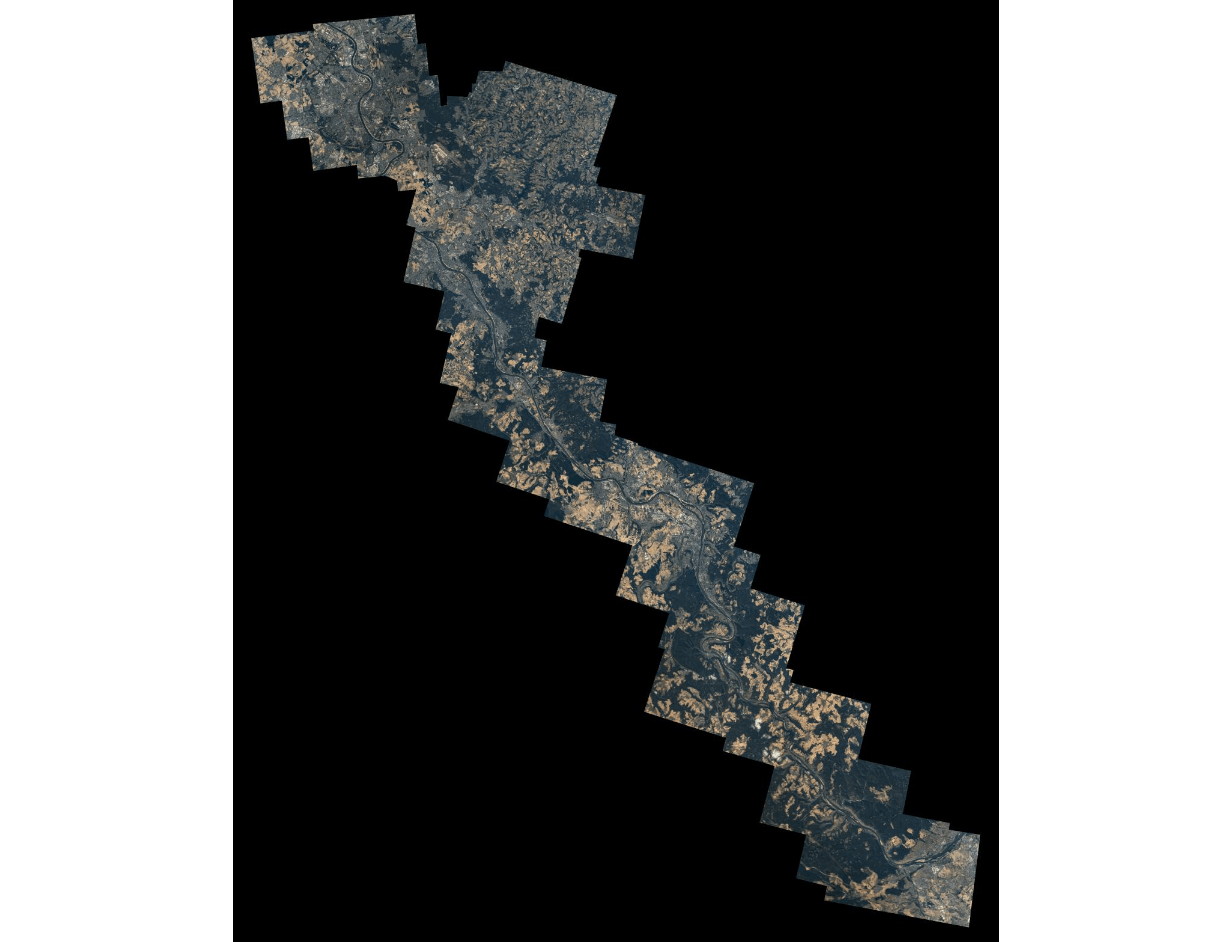
ESA astronaut Samantha Cristoforetti returned to the International Space Station for her second mission, Minerva, on 27 April 2022. In her free time, like many astronauts, she enjoys looking out of the Cupola windows at Earth. This collage of pictures... Continue Reading →
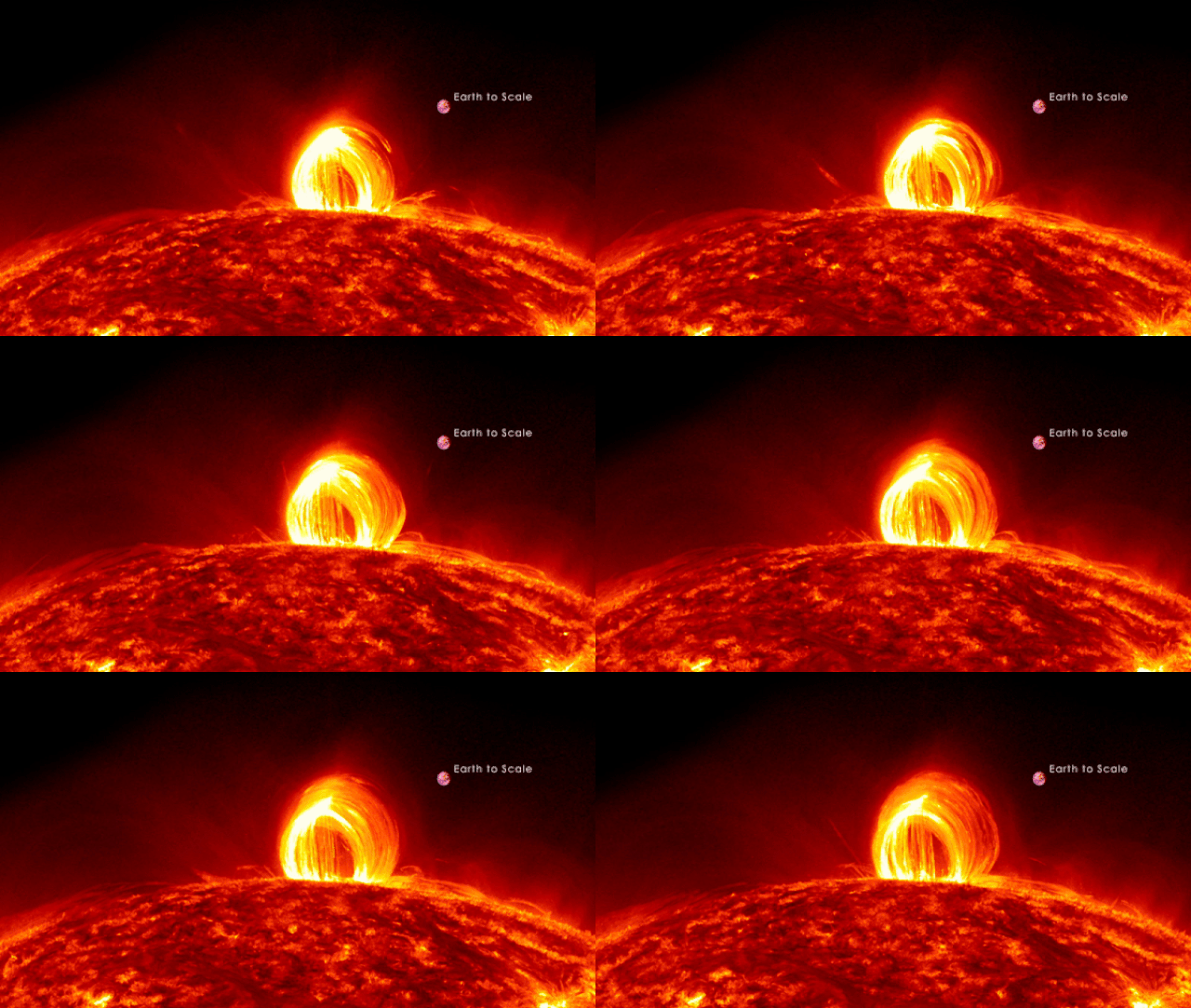
In visible light, the Sun appears blank and featureless. But through a solar telescope in a different wavelength, it is revealed to be much, much more. In extreme ultraviolet light, the Sun resembles a rumpled ball of yarn. It teems... Continue Reading →

Cycles of a diet that mimics fasting appear to reduce signs of Alzheimer’s in mice genetically engineered to develop the illness, according to a new USC Leonard Davis School of Gerontology-led study. The study appeared in Cell Reports on Sept. 27. The... Continue Reading →
Breakthrough in the production of an acclaimed cancer-treating drug achieved by Stanford researchers
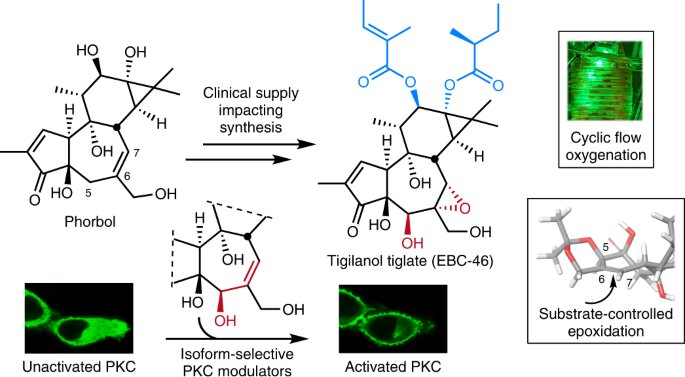
Stanford University researchers have discovered a rapid and sustainable way to synthetically produce a promising cancer-fighting compound right in the lab. The compound’s availability has been limited because its only currently known natural source is a single plant species that... Continue Reading →

Purdue University chemists have uncovered a mechanism for peptide-forming reactions to occur in water — something that has puzzled scientists for decades. “This is essentially the chemistry behind the origin of life,” said Graham Cooks, the Henry Bohn Hass Distinguished Professor... Continue Reading →

This is the last complete image of the asteroid Dimorphos, as seen by our Double Asteroid Redirection Test (DART) two seconds before impact. The Didymos Reconnaissance and Asteroid Camera for Optical navigation (DRACO) imager aboard captured a 100-foot-wide patch of the asteroid.... Continue Reading →
 Scents of Science