
The NASA/ESA/CSA James Webb Space Telescope is widely referred to as the successor to the NASA/ESA Hubble Space Telescope. In reality, it is the successor to a lot more than that. With the inclusion of the Mid-InfraRed Instrument (MIRI), Webb also became a successor... Continue Reading →

Why does the nebula around the star WR-18 shine brighter on one side? Also known as NGC 3199, this active star and its surrounding nebula lie about 12,000 light-years away toward the nautical southern constellation of Carina. The featured deep image has been highly processed to... Continue Reading →

How many galaxies are interacting here? This grouping of galaxies is called the Wild Triplet, not only for the discoverer, but for the number of bright galaxies that appear. It had been assumed that all three galaxies, collectively cataloged as Arp 248, are interacting, but... Continue Reading →
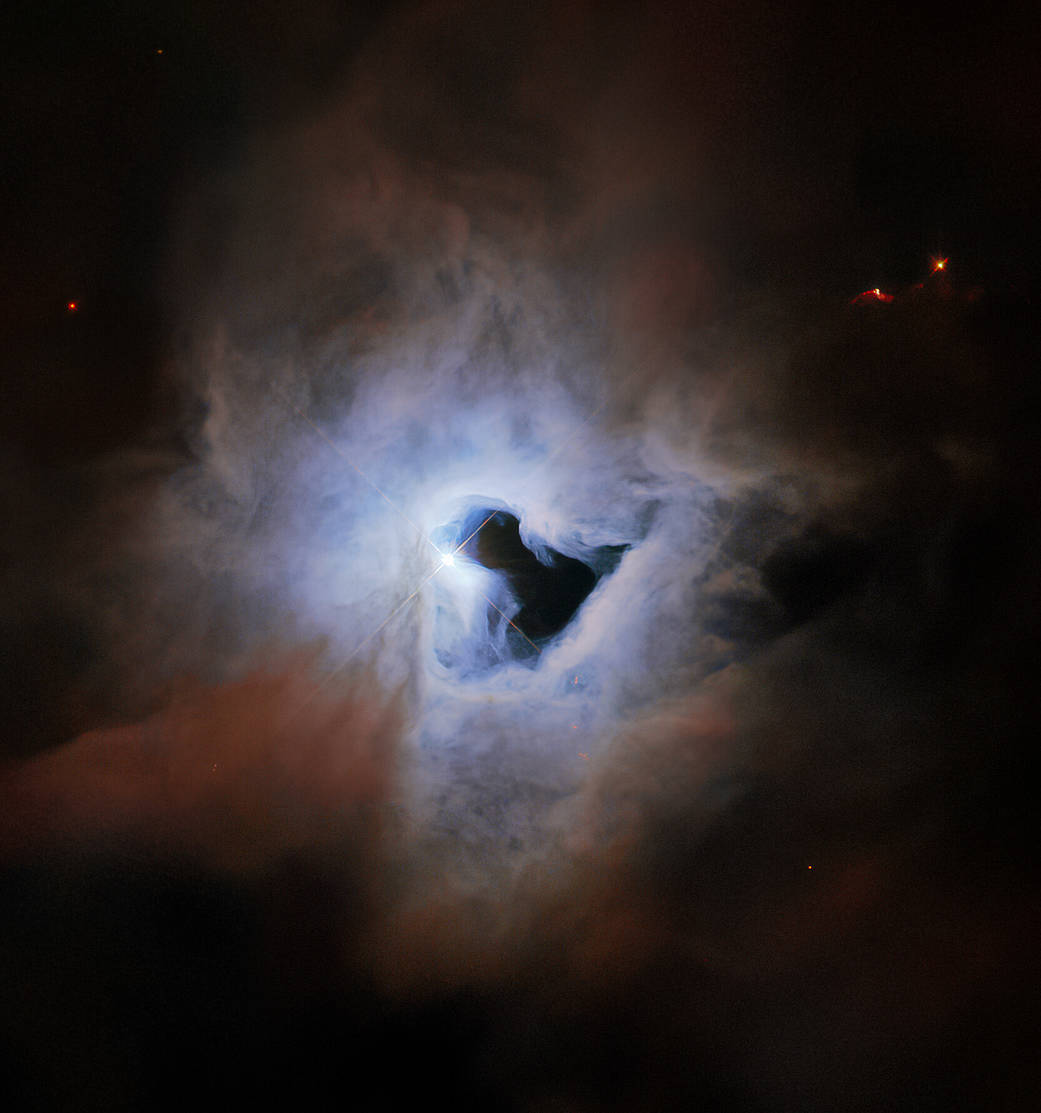
This peculiar portrait from the NASA/ESA Hubble Space Telescope showcases NGC 1999, a reflection nebula in the constellation Orion. NGC 1999 is around 1,350 light-years from Earth and lies near the Orion Nebula, the closest region of massive star formation... Continue Reading →

Hair loss is undesirable for many men — and women — because one’s hairstyle is often closely tied to their self-confidence. And while some people embrace it, others wish they could regrow their lost strands. Now, researchers reporting in ACS’ Nano... Continue Reading →

A drug called semaglutide, which is approved for adults with obesity or overweight, also helps adolescents shed pounds and have healthier hearts, according to a new study published today in the New England Journal of Medicine and presented at Obesity Week 2022. ... Continue Reading →

The Mars InSight lander returned its first image from the Red Planet's flat, equatorial Elysium Planitia after a successful touchdown on November 26, 2018. The history making mission to explore the martian Interior using Seismic investigations, geodesy, and heat transport has been operating for over 1,400... Continue Reading →

Griffith University researchers have demonstrated that a bacteria can travel through the olfactory nerve in the nose and into the brain in mice, where it creates markers that are a tell-tale sign of Alzheimer’s disease. The study, published in the... Continue Reading →

One dose of an antibody drug safely protected healthy, non-pregnant adults from malaria infection during an intense six-month malaria season in Mali, Africa, a National Institutes of Health clinical trial has found. The antibody was up to 88.2% effective at... Continue Reading →
 Scents of Science