
Have you seen the bird in the Milky Way? Beyond the man in the Moon, the night sky is filled with stories, and cultures throughout history have projected some of their most enduring legends onto the stars and dust above. Generations of people... Continue Reading →

The jellyfish galaxy JO206 trails across this image from the NASA/ESA Hubble Space Telescope, showcasing a colorful star-forming disk surrounded by a pale, luminous cloud of dust. A handful of foreground bright stars with crisscross diffraction spikes stands out against an... Continue Reading →

The center of the Lagoon Nebula is a whirlwind of spectacular star formation. Visible near the image center, at least two long funnel-shaped clouds, each roughly half a light-year long, have been formed by extreme stellar winds and intense energetic starlight. A tremendously bright nearby star, Herschel 36,... Continue Reading →

"I have often wondered why Red is the color of love, and of the heart. Until I realized that red is also the color of blood, pain, fire, and all that is dangerous and sacred. Thus Red is both beautiful... Continue Reading →

Phosphorus, a key chemical element for many biological processes, has been found in icy grains emitted by the small moon and is likely abundant in its subsurface ocean. Using data collected by NASA’s Cassini mission, an international team of scientists has... Continue Reading →

Treating a mouse model of multiple sclerosis with the pregnancy hormone estriol reversed the breakdown of myelin in the brain’s cortex, a key region affected in multiple sclerosis, according to a new UCLA Health study. BACKGROUNDIn multiple sclerosis, inflammation spurs... Continue Reading →
AMHERST, Mass. – A team of physicists, including University of Massachusetts assistant professor Tigran Sedrakyan, recently announced in the journal Nature that they have discovered a new phase of matter. Called the “chiral bose-liquid state,” the discovery opens a new path in the... Continue Reading →

Why would clouds form a hexagon on Saturn? Nobody is sure. Originally discovered during the Voyager flybys of Saturn in the 1980s, nobody has ever seen anything like it anywhere else in the Solar System. Acquiring its first sunlit views of far northern Saturn... Continue Reading →
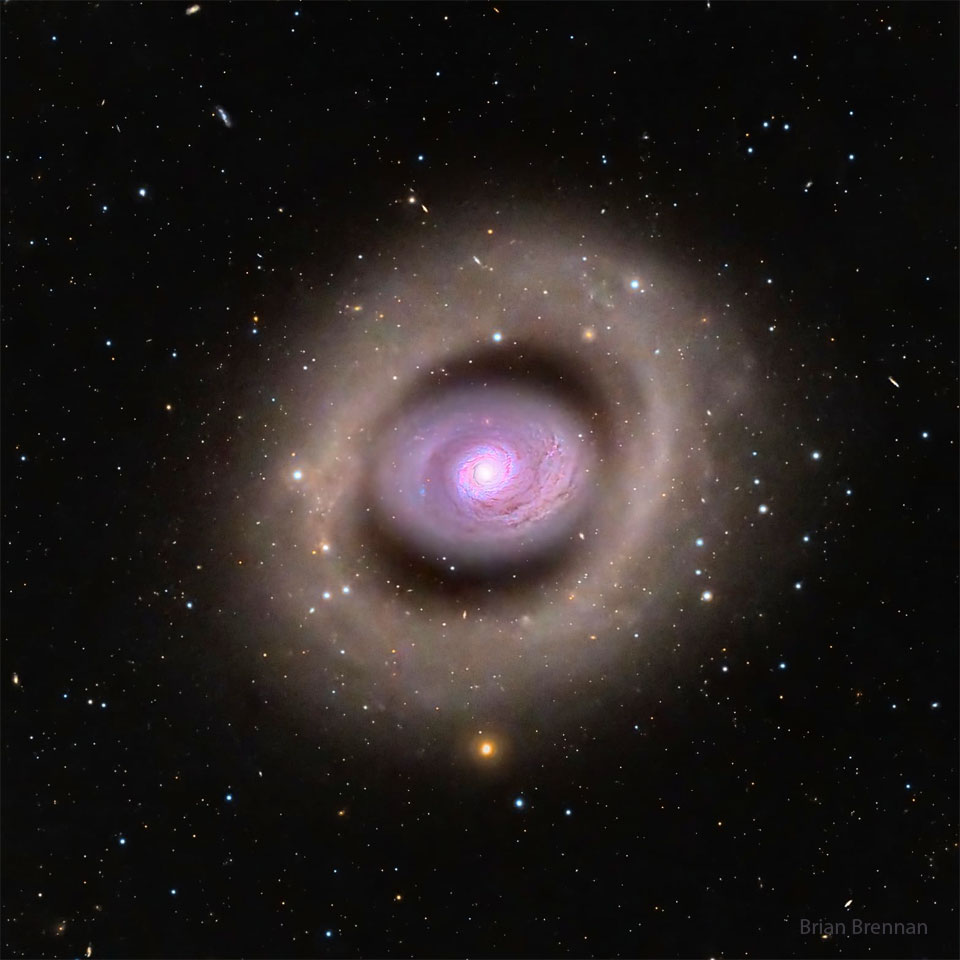
Most galaxies don't have any rings of stars and gas -- why does M94 have two? First, spiral galaxy M94 has an inner ring of newly formed stars surrounding its nucleus, giving it not only an unusual appearance but also a strong interior glow. A leading origin... Continue Reading →
 Scents of Science